JGF X Lemhannas RI Plenary Session 2 Addresses Green Energy, Financial, and Trade Rivalries
News & Article Thursday, 09 July 2026, 10:00
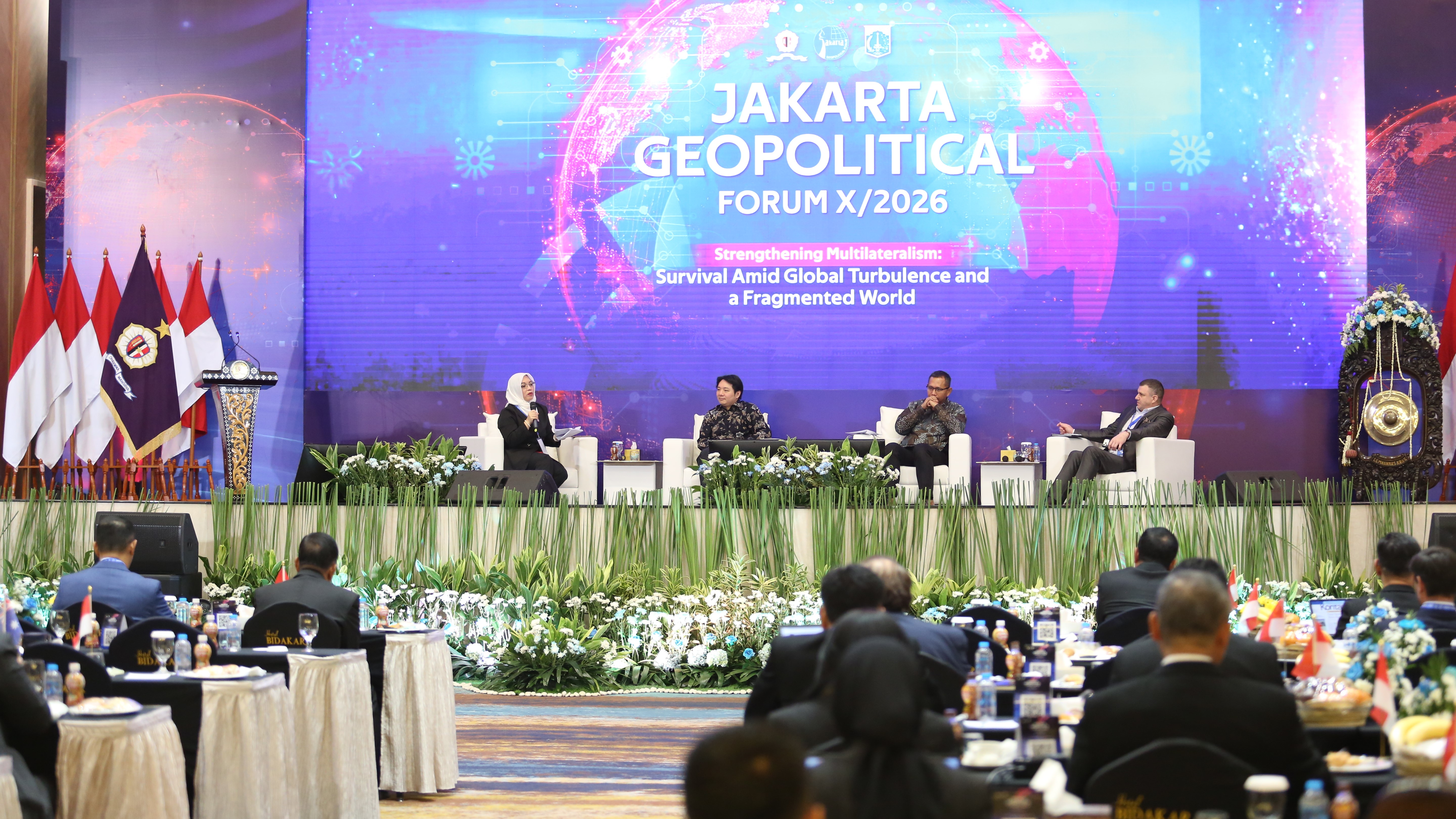
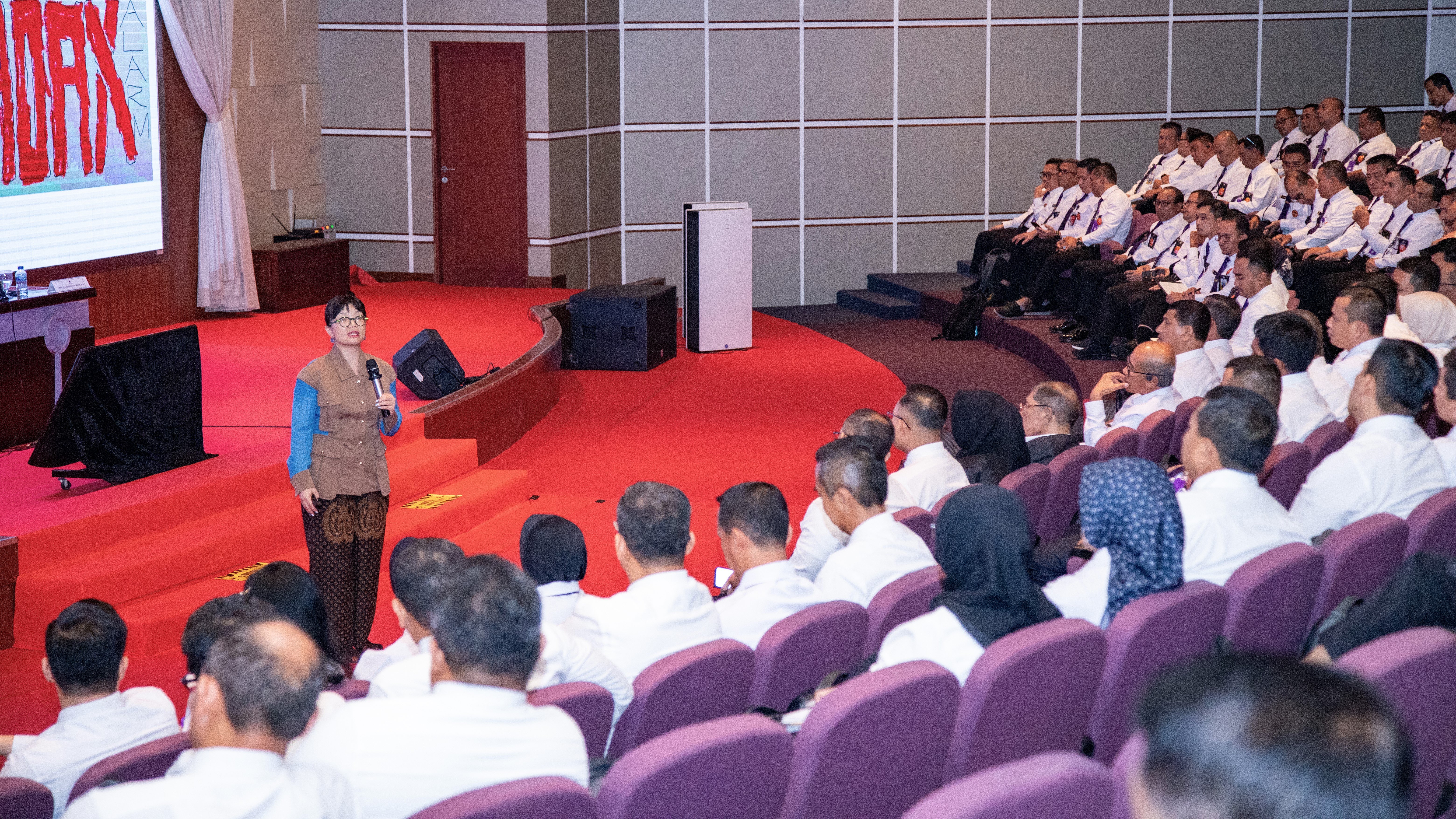
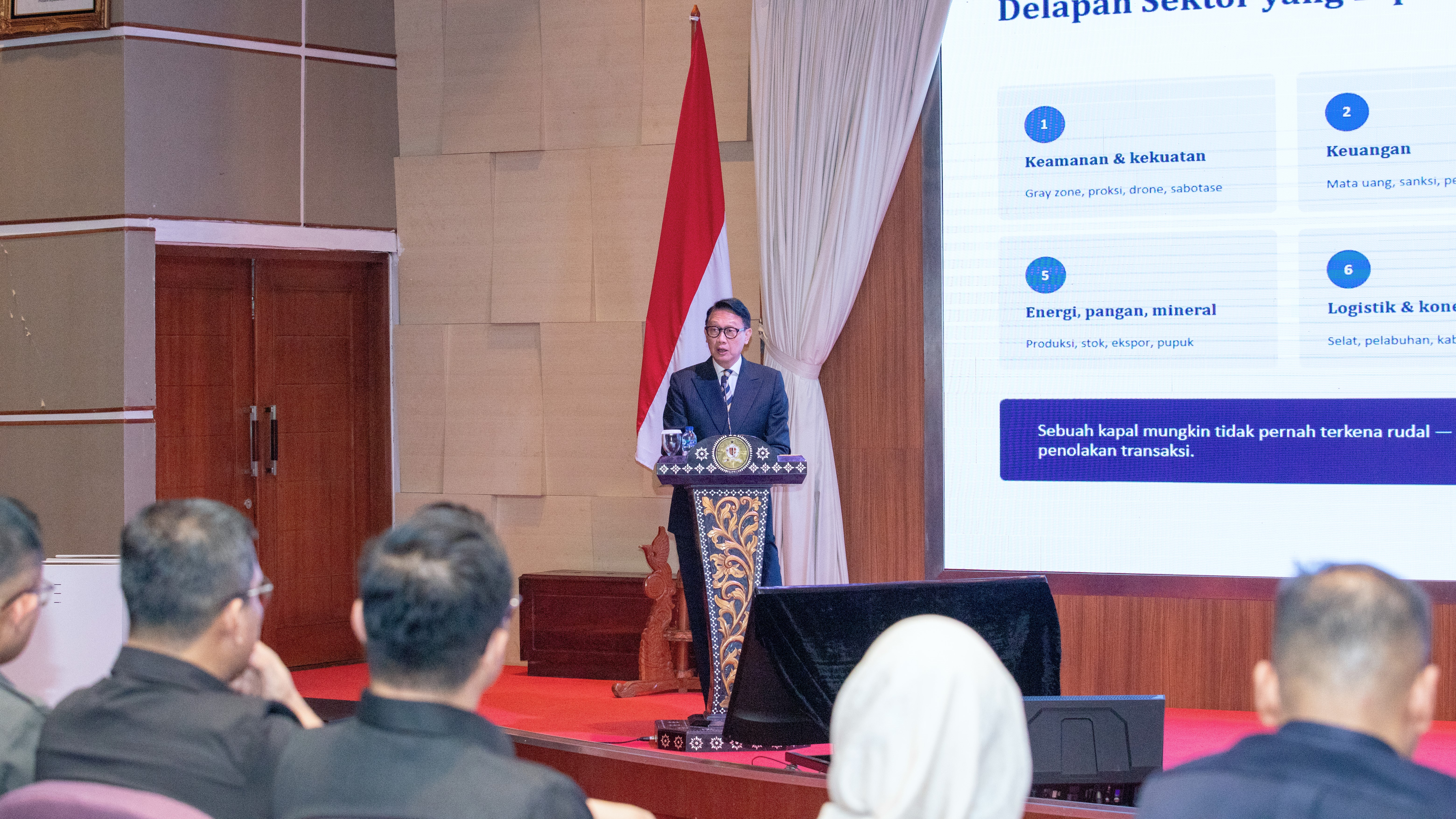
The 2nd Plenary Session of the 10th Jakarta Geopolitical Forum (JGF) organized by Lemhannas RI at Binakarna Auditorium of Bidakara Hotel, Jakarta, on Thursday (7/9), featured several speakers, including Vice Minister of Trade of Indonesia, Dyah Roro Esti Widya Putri; Head of Asia -Pacific and Global Head of Central Bank at the World Gold Council, Shaokai Fan, MPA; Managing Director of the World Resources Institute (WRI) Indonesia, Arief Wijaya; and Energy, Mining & Business Development Expert and Vice Chairman of the Djakarta Mining Club, Ben Lawson, Ph.D.
The plenary session began with special remarks delivered by Dyah Roro. She delivered a presentation titled “Rebalancing Power Through Trade: Tariffs and Strategic Competition in an Era of Economic Slowdown.”
Dyah Roro stated that the global economy is facing profound transformation. Trade is no longer viewed solely through the lens of efficiency and market access but is closely linked to national security, technological leadership, industrial policy, and geopolitical influence. Trade measures, such as tariffs, export controls, and sanctions, are now used not only as economic instruments but also as strategic tools.
Dyah Roro explained that developing countries are required to navigate the global landscape while addressing the demands for openness and resilience. For Indonesia, trade must remain a bridging force, not a battlefield. “Therefore, we must not resist globalization, but rather make it more equitable, more inclusive, more resilient, and more responsive to current realities,” she said.
Citing data from the World Bank, Dyah Roro said that developing countries are projected to account for about 45% of global gross domestic product (GDP) by 2026. This figure represents a significant increase from 2000, when it stood at just 25%.
This shift essentially reflects the increasingly important role that developing countries play in shaping the future of global growth, trade, and investment. For middle powers like Indonesia, this transformation brings significant responsibility, as middle powers can shape outcomes by building relationships, fostering trust, and offering practical solutions.
Dyah Roro went on to say that Indonesia’s approach is based on strategic flexibility, diversified partnerships, and economic engagement in addressing global dynamics. She believes that Indonesia must continue to uphold ASEAN’s centrality as the foundation for regional peace, stability, and economic integration; pursue open and inclusive economic diplomacy; and strengthen domestic competitiveness through industrial capacity building, the downstreaming of value-added industries, digital transformation, and the development of resilient supply chains.
In an era of increasingly complex strategic competition, Dyah Roro emphasized that Indonesia must ensure that global economic governance remains effective through international institutions such as the World Trade Organization (WTO), the International Monetary Fund (IMF), and the World Bank—which have contributed significantly to global economic stability for decades.
The session proceeded with a panel discussion moderated by Prof. Dr. Telisa Aulia Falianty, S.E., M.E., an economic professional at Lemhannas RI. The first speaker, Shaokai Fan, delivered a presentation titled “Currency Competition in Transition: De-dollarization, Gold, Digital Money, and the Future of Global Trade and Regional Cooperation.”
Beginning his presentation, Shaokai Fan mentioned that demand for gold shows a fairly strong and widespread trend. Approximately 70% of total gold demand comes from developing countries, including Indonesia. This indicates that developing countries like Indonesia have become a very important part of the gold market.
Furthermore, Shaokai Fan discussed the geographically widespread supply of gold and the high level of demand. This is based on two reasons: first, gold mining takes place on every continent except Antarctica. This makes the gold supply relatively more resilient to potential disruptions compared to oil, making supply disruptions unlikely. Second, Indonesia is the largest gold producer in Southeast Asia and ranks as the 10th-largest gold-producing country in the world. This places Indonesia in a strategic position to optimally capitalize on rising gold prices.
Furthermore, Shaokai Fan noted that over the past five years, there has been a remarkable shift in Central Banks’ perspective toward gold, which is set to become a significant portion of global reserve assets. This presents a contrasting outlook for the U.S. dollar. Highlighting the very high price of gold, Shaokai Fan noted that 45% of central banks plan to purchase large quantities of gold and store it both domestically and abroad. “So again, you can see the impact of geopolitics in reserve management decisions and in how central banks view gold as a reserve asset,” Shaokai Fan said.
Furthermore, Shaokai Fan said that Indonesia is in an excellent position to capitalize on this as a major gold-producing country. Shaokai Fan also expressed hope that gold would be further integrated into Indonesia’s financial system.
The next speaker, Arief Wijaya, delivered a presentation on the theme “Advancing a Sustainable Green Economy: Cooperation, Strategic Resources, and the Future of Industrial Transformation.” Arief highlighted Indonesia’s position as the world’s largest nickel producer and the country with the world’s largest nickel reserves—approximately 60 million metric tons of nickel, equivalent to 44% of the total reserves of other critical minerals such as tin, cobalt, bauxite, and copper. With this resource potential, Indonesia is considered to occupy a highly strategic position in shaping the future direction of the critical minerals industry.
The government has made nickel downstream processing a priority. This is a strategic government decision based on the 2025–2029 National Medium-Term Development Plan (RPJMN). Additionally, Indonesia has set a very high economic growth target of 8%. Sustainable nickel downstream processing is one of the key strategies for achieving this goal.
Over the past 14 years, revenue from the nickel industry has increased tenfold, reaching approximately 3 billion USD in 2010. This demonstrates that nickel and nickel products can serve as a strategic sector for Indonesia’s economic development.
Arief stated that Indonesia’s development must be driven by economic transformation—specifically, climate action and inclusive, responsible, and sustainable economic development must go hand in hand. In his view, no country can achieve fair and equitable economic transformation without pursuing a development path oriented toward a low-carbon and inclusive economy.
The key to green industry initiatives is cooperation. Arief noted that the green industry must expand global clean technology capacity, accelerate industrial decarbonization, and create shared value across the entire supply chain. He believes this is the only way for global cooperation in trade and development to benefit all parties.
Next, the final speaker at the second plenary session, Ben Lawson, delivered a presentation on the theme “Reconfiguring Regional Supply Chains and Logistics: Diversification, Intra-Regional Trade, and Economic Resilience.” During the COVID-19 pandemic, the world faced numerous supply chain disruptions, which were exacerbated by the closure of the Strait of Hormuz, thereby impacting energy supplies.
Indonesia is known as the world’s largest producer of nickel. Highlighting this, Ben noted that Indonesia plays a very significant role in the global supply chains for minerals and energy. Ben also emphasized that avoiding dependence on competing technologies and aligning with specific market blocs is a key factor in Indonesia’s success. In his view, Indonesia needs to focus on numerous domestic structural reforms.
Furthermore, Ben highlighted several areas Indonesia needs to address, namely logistical challenges, the development of solar power facilities, waste-to-energy processing, and the transition from coal to renewable energy. Regarding the transition from coal to renewable energy, Indonesia possesses vast and abundant coal reserves.
The use of clean coal technologies, such as gasification and ultra-supercritical combustion, is seen as a potential solution to improve efficiency while reducing the environmental impact of coal use. In line with this, Indonesia is advised to seize this momentum to optimize the use of its coal resources through cleaner and more efficient technologies. “Burn coal cleaner, burn it or use it better, but it shouldn’t be a hamstring to Indonesia to use a massive resource that your country is blessed with,” he concluded. (SP/CHP/DA)