Lemhannas RI Hosts the 10th Jakarta Geopolitical Forum
News & Article Thursday, 09 July 2026, 08:00
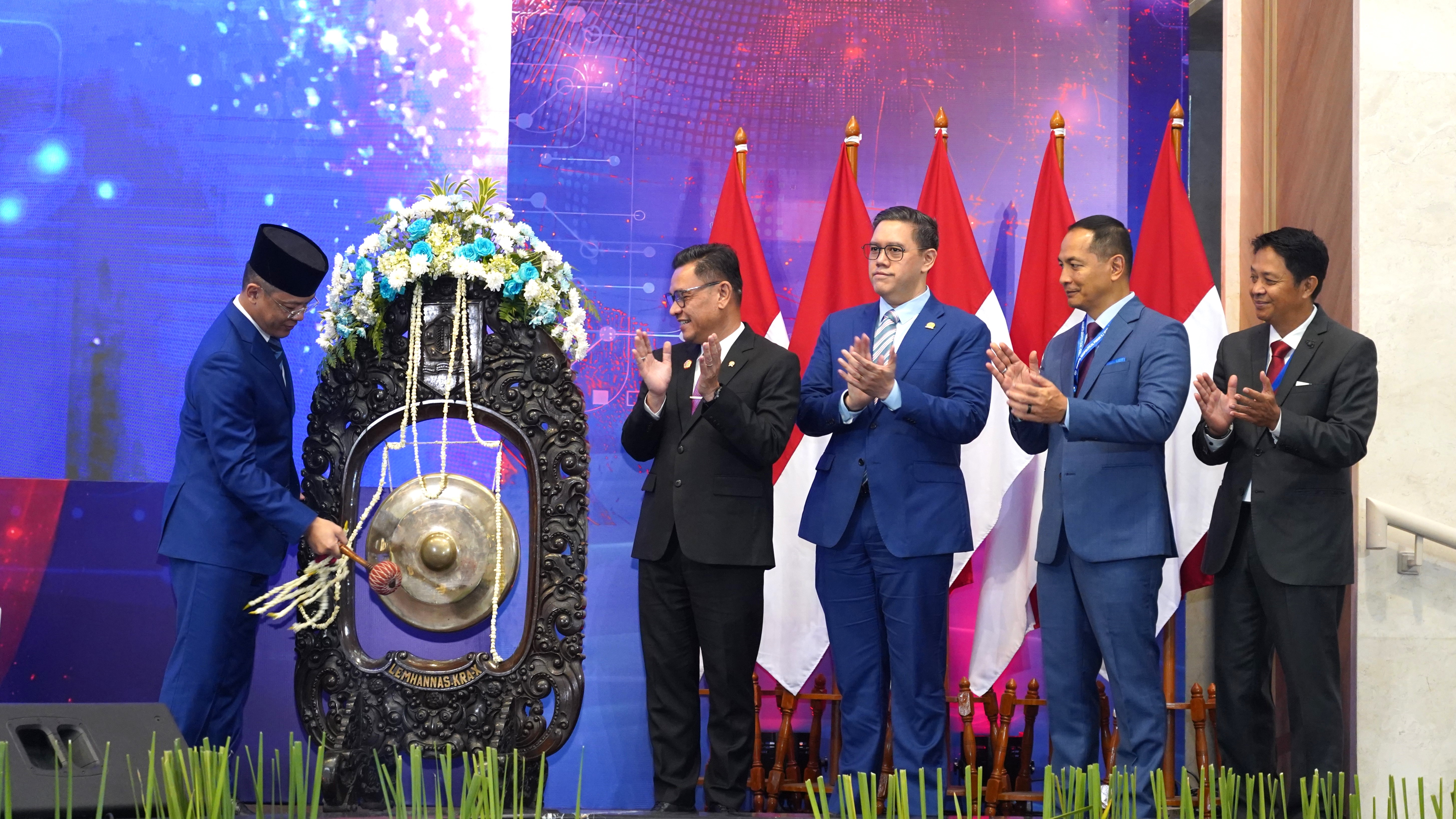
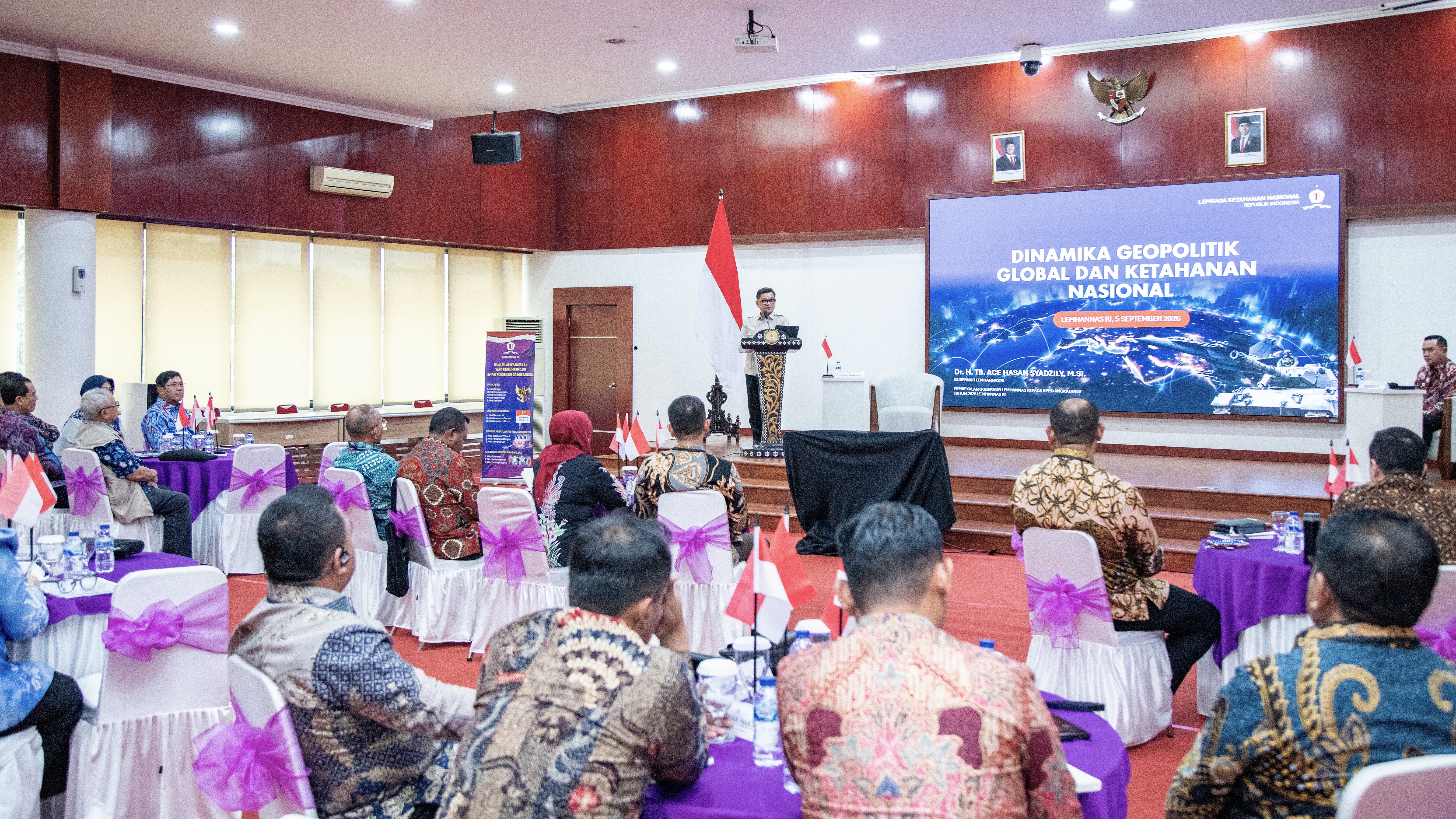
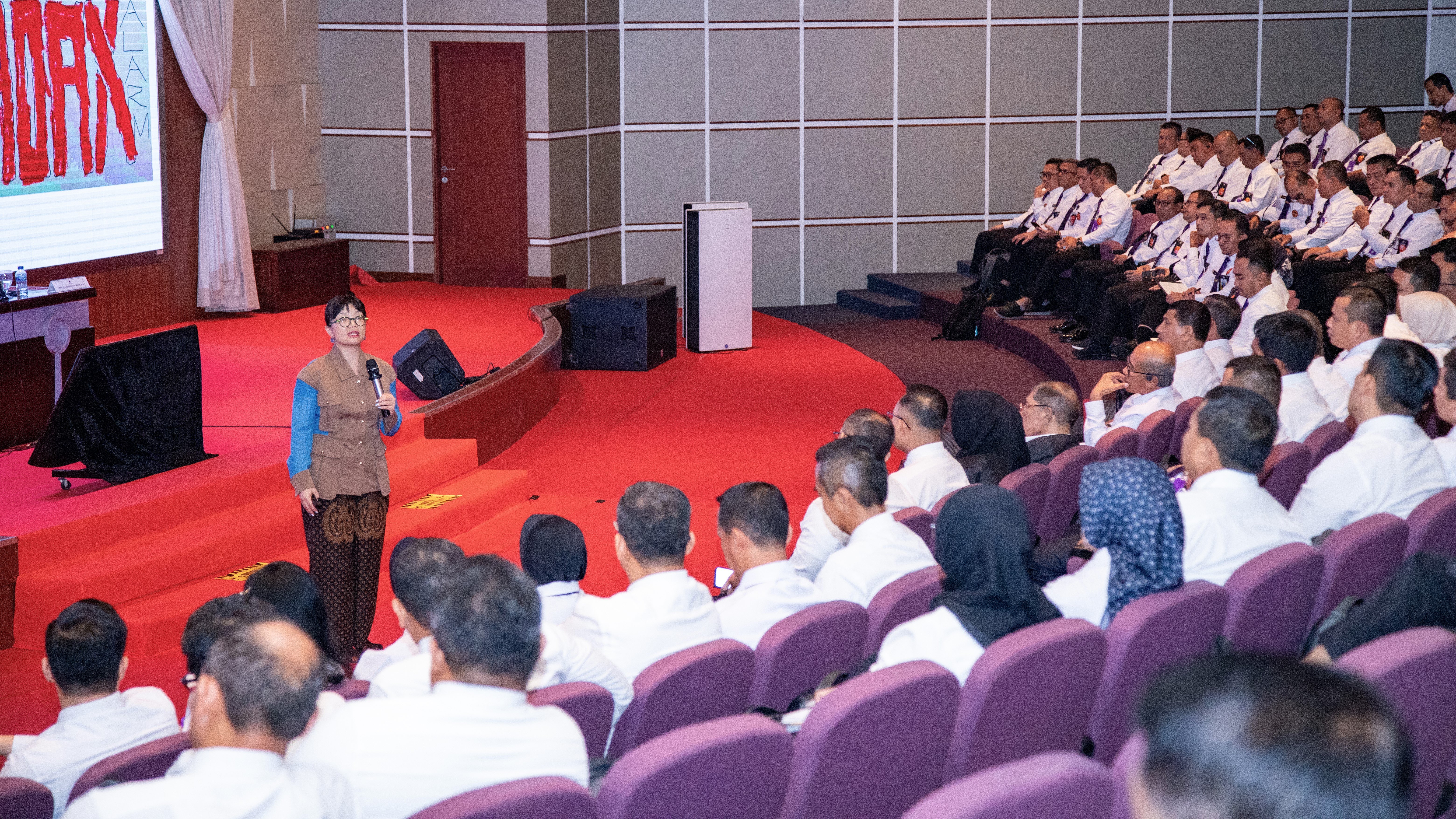
“We are here today as the international environment becomes increasingly complex, uncertain, and fragmented,” the Governor of Lemhannas RI, Dr. H. TB. Ace Hasan Syadzily, M.Si., said while opening the 10th Jakarta Geopolitical Forum 2026, held at the Binakarna Auditorium, Bidakara Hotel, Jakarta, on Thursday (7/9). The Governor of Lemhannas RI explained that current global fragmentation is particularly evident in the sectors of trade, investment, energy security, food security, employment, technological standards, government data governance, and the security of critical infrastructure. These conditions have a significant impact and directly affect the daily resilience of the people of Indonesia. “Discussing geopolitics also means discussing the daily resilience of the people of Indonesia and our nation’s strategic capacity,” he said.
Highlighting this issue, the Jakarta Geopolitical Forum X/2026 adopted the theme “Strengthening Multilateralism: Survival Amid Global Turbulence and a Fragmented World.” This theme reflects a common concern that multilateralism—which has long served as a pillar of global governance—is now under pressure from the logic of power, strategic protectionism, and competition among technology ecosystems. Strengthening multilateralism is a strategic necessity for small and medium-sized powers, including Indonesia. The journey toward strengthening multilateralism must be underpinned by domestic resilience. Domestic resilience requires a secure economy, reliable supply and energy chains, a strong workforce, digital readiness, social cohesion, and the ability to adapt to rapid technological change.
The Governor of Lemhannas RI noted that when shared rules weaken, those who rely on the rule of law, cooperation, and legal certainty are the most vulnerable. This is why Indonesia continues to uphold a free and active foreign policy: cooperating with all parties, remaining independent of any single power, and consistently prioritizing national interests, regional stability, and respect for international law within a single strategic framework.
He stated that the forum was designed as a workspace for strategic thinking. In this forum, Indonesia listens, contributes, and formulates practical policy ideas for national resilience, regional stability, and global cooperation. “May our discussions today contribute to a more resilient Indonesia, a more cohesive region, and a more functional multilateral order,” the Governor of Lemhannas RI said.
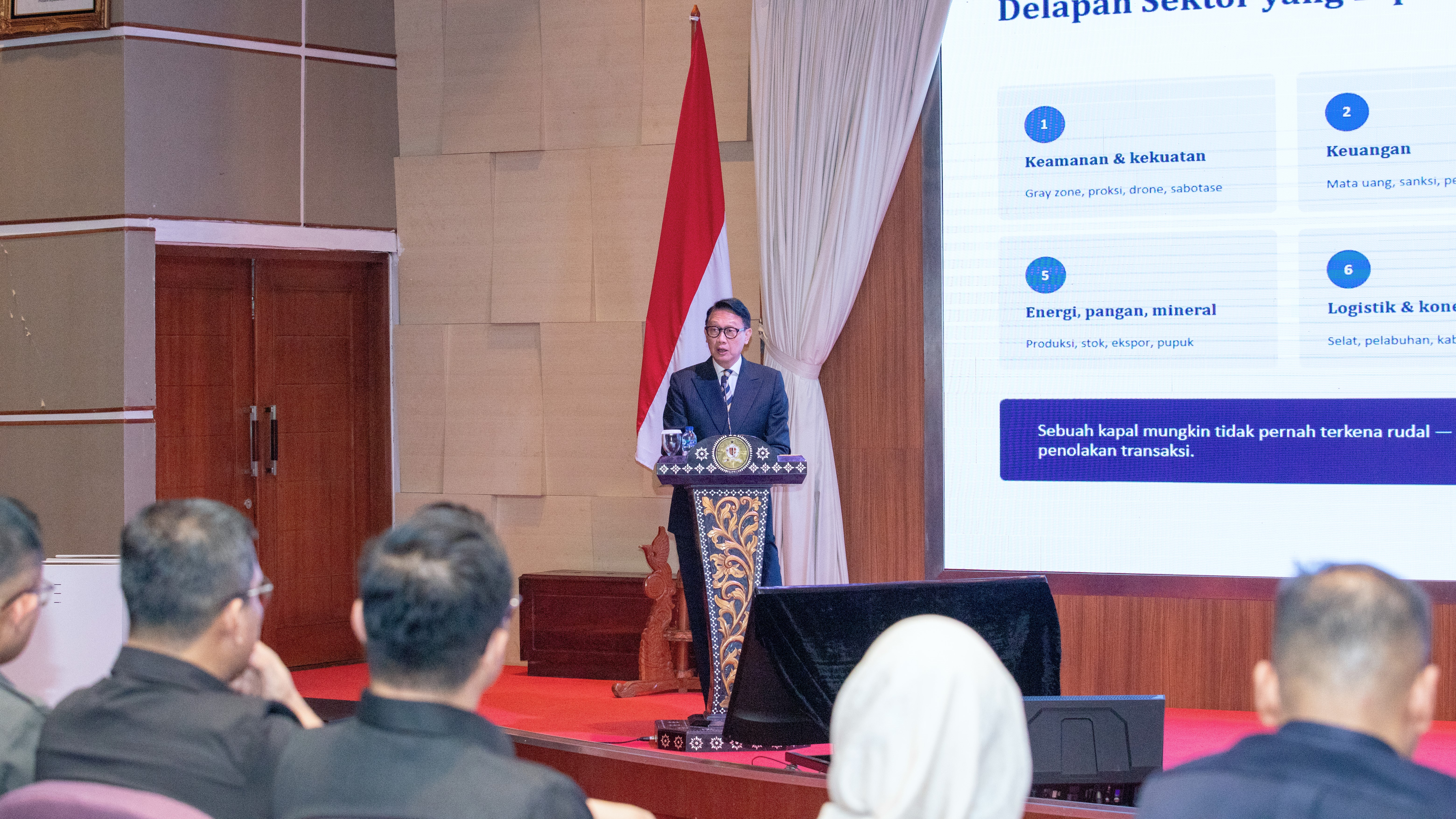
Also present at the forum was Indonesia’s Minister of Foreign Affairs, Sugiono, as the keynote speaker who discussed strategic adaptation and opportunities amid the weakening of multilateralism and the era of power competition. The Minister stated that humanity is currently facing simultaneous crises unprecedented in modern history. “Strategic rivalries are reshaping geopolitics, while economic coercion and protectionism are eroding mutual trust,” he stated.
Threats no longer come one at a time; everything is now interconnected. Today’s challenges are too interrelated, too transnational, and have too far-reaching an impact. Therefore, strategic adaptation cannot be achieved by a single country working alone. The Minister of Foreign Affairs of the Republic of Indonesia emphasized that when facing various issues that cannot be resolved alone, the capacity to act collectively is put to the test. However, at a time when cooperation is most needed, the multilateral system often struggles to deliver its best results.
Nevertheless, none of these challenges will deter Indonesia from pursuing its free and active foreign policy. On the contrary, the “Free and Active” foreign policy is essential because it grants Indonesia the freedom to determine its position on every issue and the courage to act in accordance with that principle. The essence of “Free and Active” is to build bridges while others build walls. “Free and Active’ foreign policy does not necessarily mean passive neutrality; this policy has never aimed merely to play it safe or remain silent,” he said.
Regarding the current fragmentation, Indonesia will face it with confidence, not fear. “Every disruption also creates gaps and opportunities—new markets, new partnerships, new rules of the game. Those opportunities will fall into the hands of countries that are trustworthy, open, and prepared. And Indonesia is determined to be such a nation,” added the minister. Therefore, a better form of multilateralism must be built—one designed for today’s world. “Multilateralism is not a self-propelled machine. It is a choice that nations must make consistently, time and again,” he explained. Indonesia stands by this principle and is committed to being at the negotiating table, not standing idly by. Indonesia will help shape the rules, instead of simply following them.
This, of course, would be impossible to achieve without a strong national foundation. Therefore, Lemhannas’ perspective on national resilience is highly relevant. National resilience today is more than just territorial defense. It is a nation’s capacity to absorb shocks, maintain policy choices, and protect its people under pressure. “Resilience is sovereignty translated into capability,” the Indonesian Minister of Foreign Affairs remarked.
In addition to Minister Sugiono, the forum featured several speakers, including Vice Minister of Trade of Indonesia, Dyah Roro Esti Widya Putri, B.A., M.Sc.; Vice Minister of Communication and Digital Affairs of Indonesia, Nezar Patria; Pro Vice-Chancellor for Research and Professor of International Relations at La Trobe University, Prof. Nick Bisley; National Coordinator of the Council for Security Cooperation in the Asia-Pacific (CSCAP), Prof. Dr. Georgy Toloraya; Professor of International Law at the University of Indonesia, Prof. Hikmahanto Juwana, S.H., LL.M., Ph.D.; Head of Asia-Pacific and Global Head of Central Bank, Mr. Shaokai Fan; Managing Director, World Resources Institute (WRI) Indonesia, Dr.rer.nat. Arief Wijaya; Vice Chairman of the Jakarta Mining Club, Mr. Ben Lawson, Ph.D.; Country Manager of Rockwell Automation Indonesia, Adi Darmadi; Vice President of International Relations at Thales Group, Jean-Noel Bonnieu; and President Director & Managing Shareholder at ITSEC Asia, Mr. Patrick Rudolf Dannacher. (NA/CHP/DA)