Lemhannas Vice Governor Chairs Discussion on the Economy to Achieve Equitable Welfare
News & Article Wednesday, 26 August 2026, 15:00
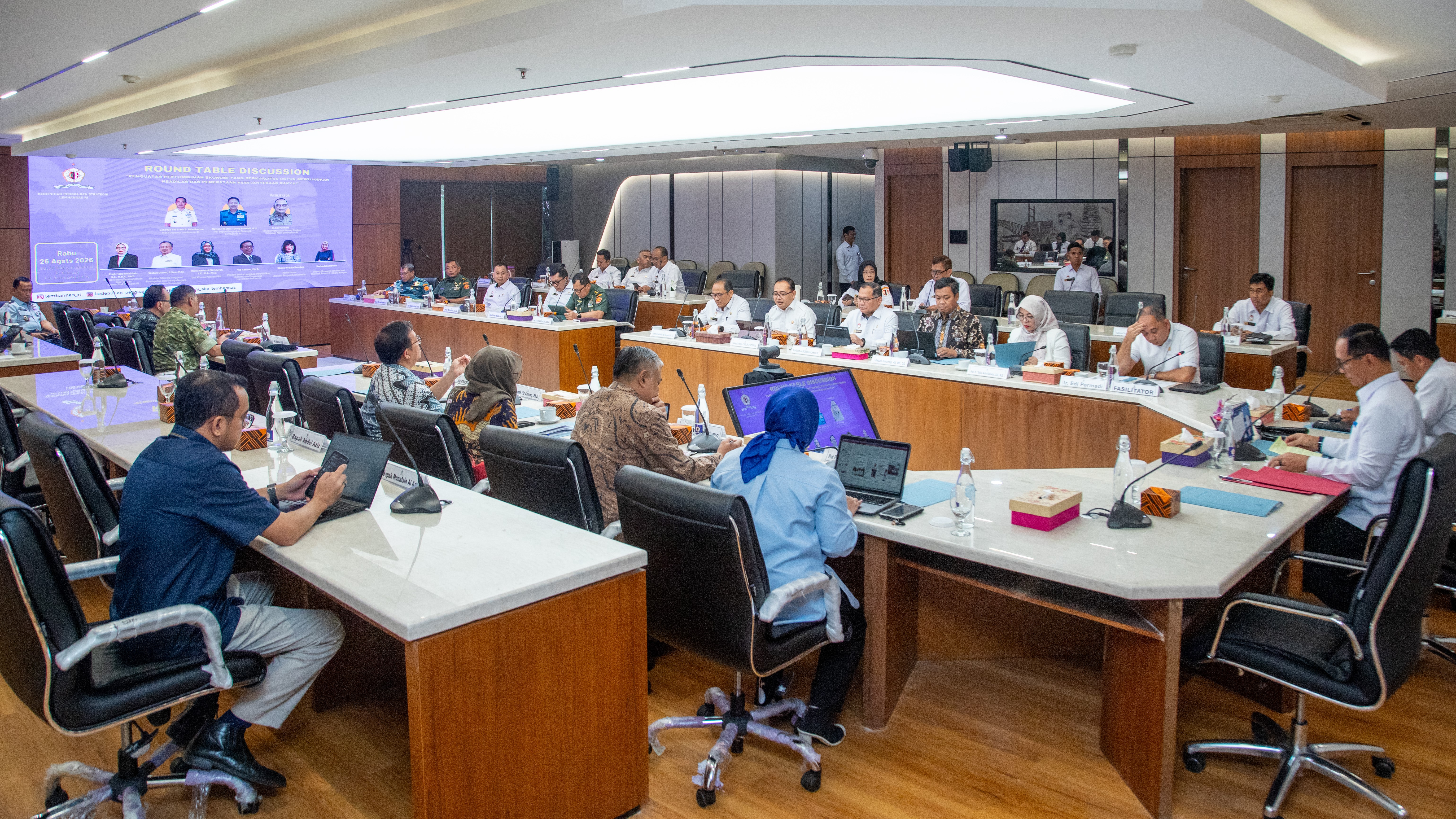
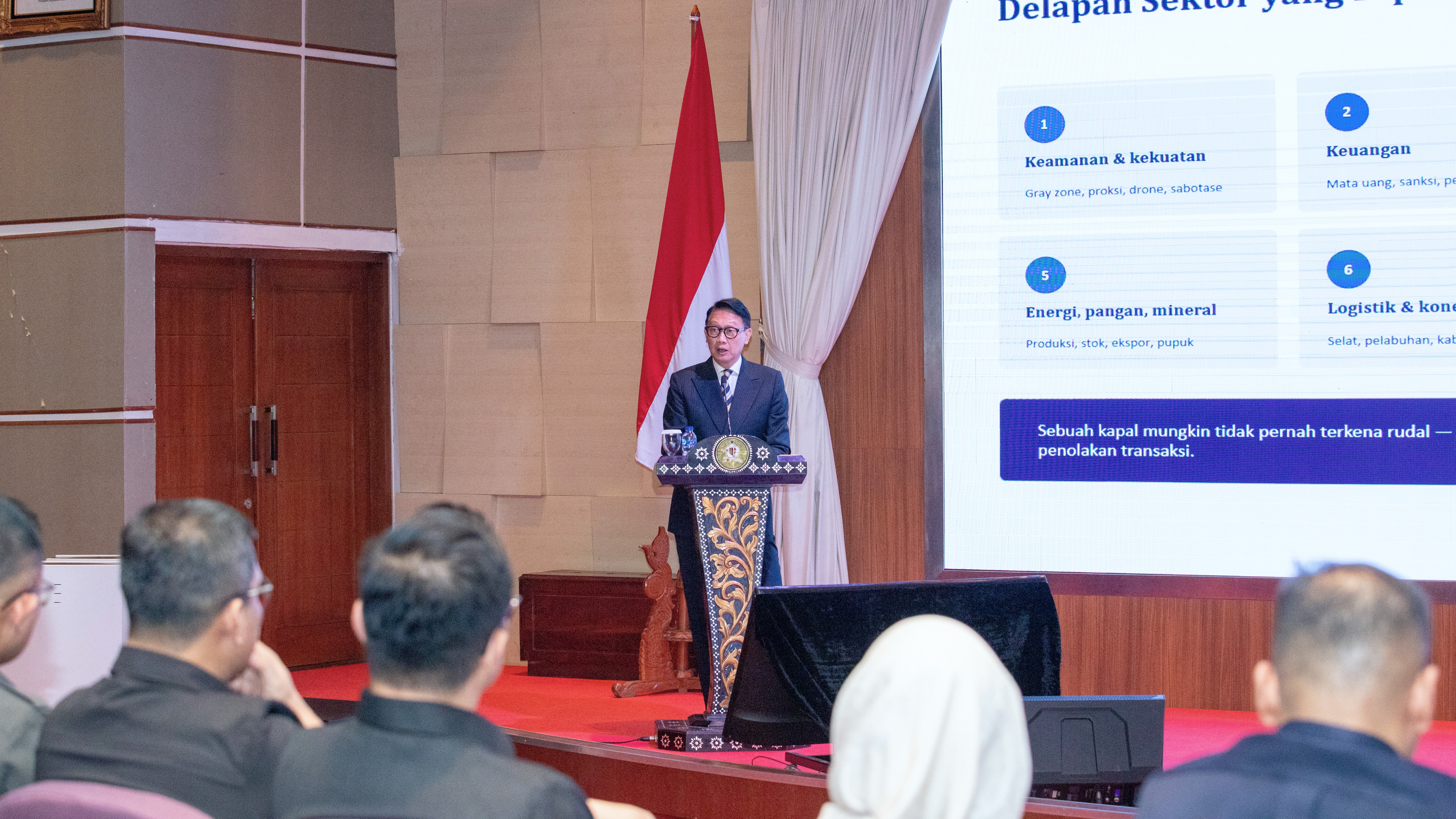
"Fundamentally, national development is directed not only toward increasing production capacity and enlarging the gross domestic product," the Vice Governor of Lemhannas RI, Vice Admiral TNI Erwin S. Aldedharma, said during a Long-Term Study Round Table Discussion (RTD) themed "Strengthening Quality Economic Growth to Achieve Social Justice and Equitable People's Welfare" on Wednesday (August 26).
Furthermore, the Vice Governor explained that national development must ensure economic progress expands opportunities, boosts public productivity, creates decent jobs, reduces poverty and inequality, and fortifies national resilience.
On this occasion, the Vice Governor noted that Indonesia's economy has grown steadily amid heightened global economic uncertainty in 2026. Statistics Indonesia (BPS) recorded that the Gross Domestic Product (GDP) at current prices reached 6,187.2 trillion Rupiah. This figure shows Indonesia's economy grew by 5.61 percent year-on-year (YoY) in the first quarter of 2026—higher than the Q1 2025 growth rate of 4.87 percent and the Q4 2025 rate of 5.39 percent.
Highlighting these figures, Lemhannas RI considers it vital to analyze this economic expansion more deeply to ensure that growth is not merely high in aggregate terms, but also productive, inclusive, equitable, and capable of elevating community welfare down to the regional level.
On the expenditure side, Q1 2026 growth remained driven primarily by domestic demand. Household consumption grew 5.52 percent, accounting for 54.36 percent of GDP. Government consumption rose sharply by 21.81 percent, driven by front-loaded spending, the implementation of national priority programs, and major religious holidays, among other factors. Gross fixed capital formation grew 5.96 percent, accounting for 28.29 percent of GDP. Conversely, exports of goods and services grew by only 0.90 percent—significantly lower than import growth, which reached 7.18 percent. The Vice Governor noted that this condition underscores the need to strengthen national production capacity, enhance export competitiveness, deepen industrialization, and reduce reliance on imported goods.
"Quadrant analysis results show that there is no automatic link between high growth, large economic scale, low poverty, and an equitable distribution of welfare," the Vice Governor stated.
The Director of State Budget Strategy at the Ministry of Finance, Wahyu Utomo, S.Sos., M.Si., said that the 2026 State Budget (APBN) outlook adopts an expansive yet measured approach. "The State Budget functions not only as a shock absorber, but also optimally as an agent of development and a shield for the poor," he noted. He further explained that the State Budget maintains energy and food supply and price stability through subsidies and compensation, protects public purchasing power through social protection policies, provides economic stimulus for businesses, and enhances the effectiveness and governance of priority programs.
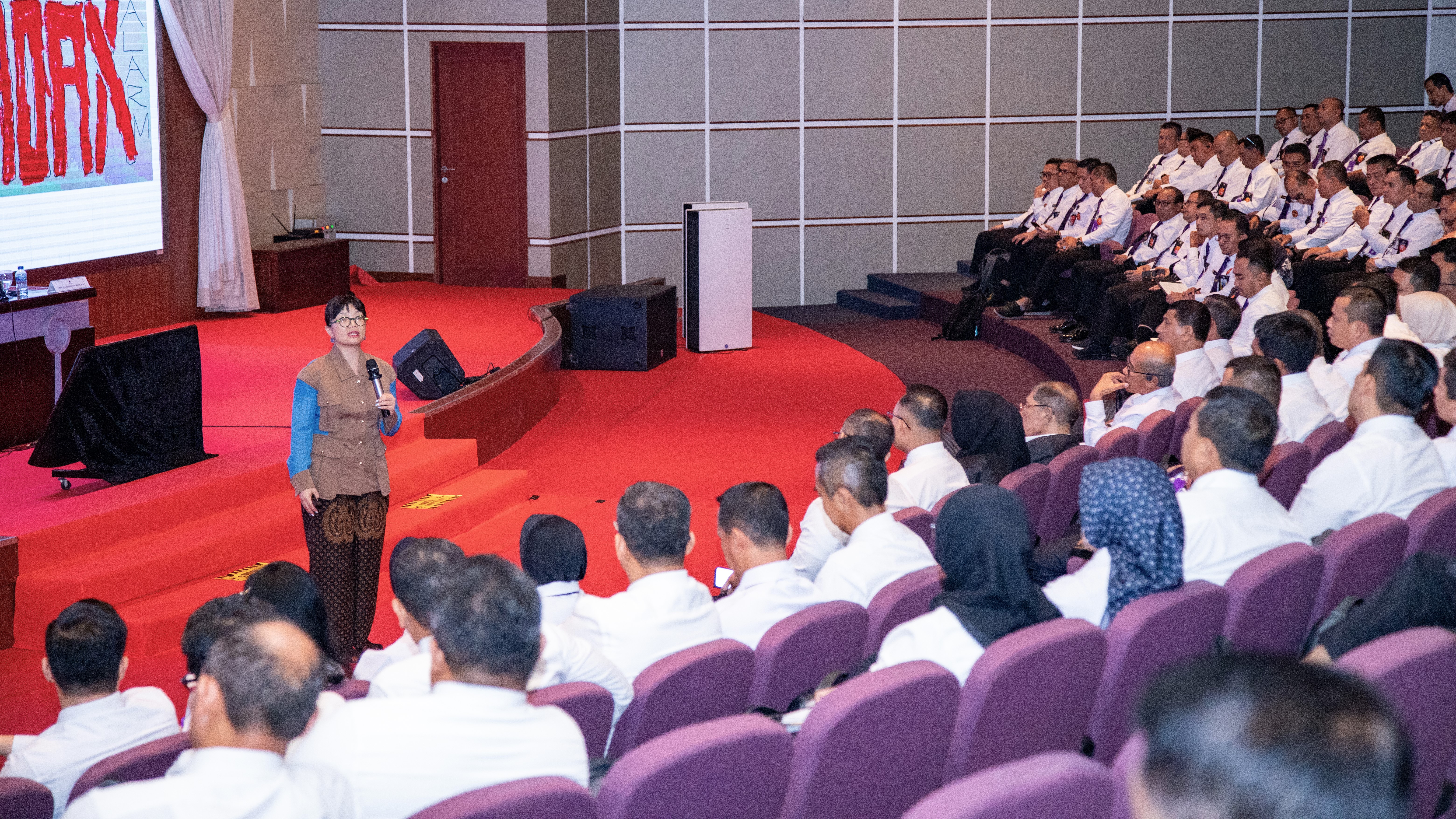
Distinguished speakers also attended the discussion, including the Deputy for Economy and Food at the Executive Office of the President (KSP), Prof. Popy Rufaidah, S.E., M.B.A., Ph.D.; Special Staff to the Ministry of National Development Planning/Bappenas, Riatu Mariatul Qibthiyyah, S.E., M.A., Ph.D.; Senior Researcher at the Institute for Economic and Social Research, Faculty of Economics and Business, Universitas Indonesia (LPEM FEB UI), Vid Adrison, Ph.D.; General Chairwoman of the Indonesian Employers Association (APINDO), Shinta Widjaja Kamdani; and Deputy Manager of Kompas R&D, Karina Isna. (NA/CHP/DA)