Cyber Power and Global Competition Take Center Stage in JGF X Lemhannas RI Session 3
News & Article Thursday, 09 July 2026, 15:00
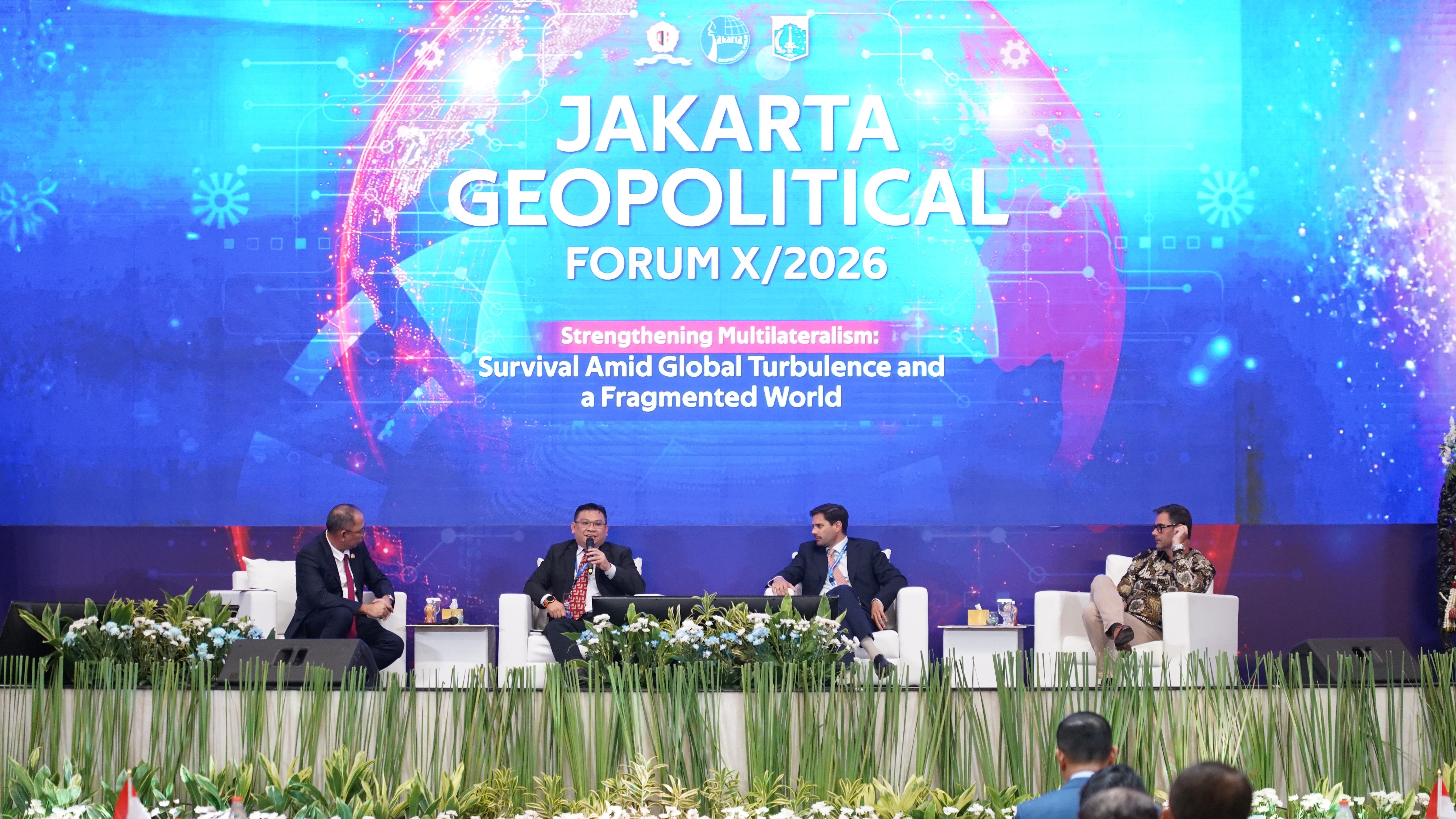
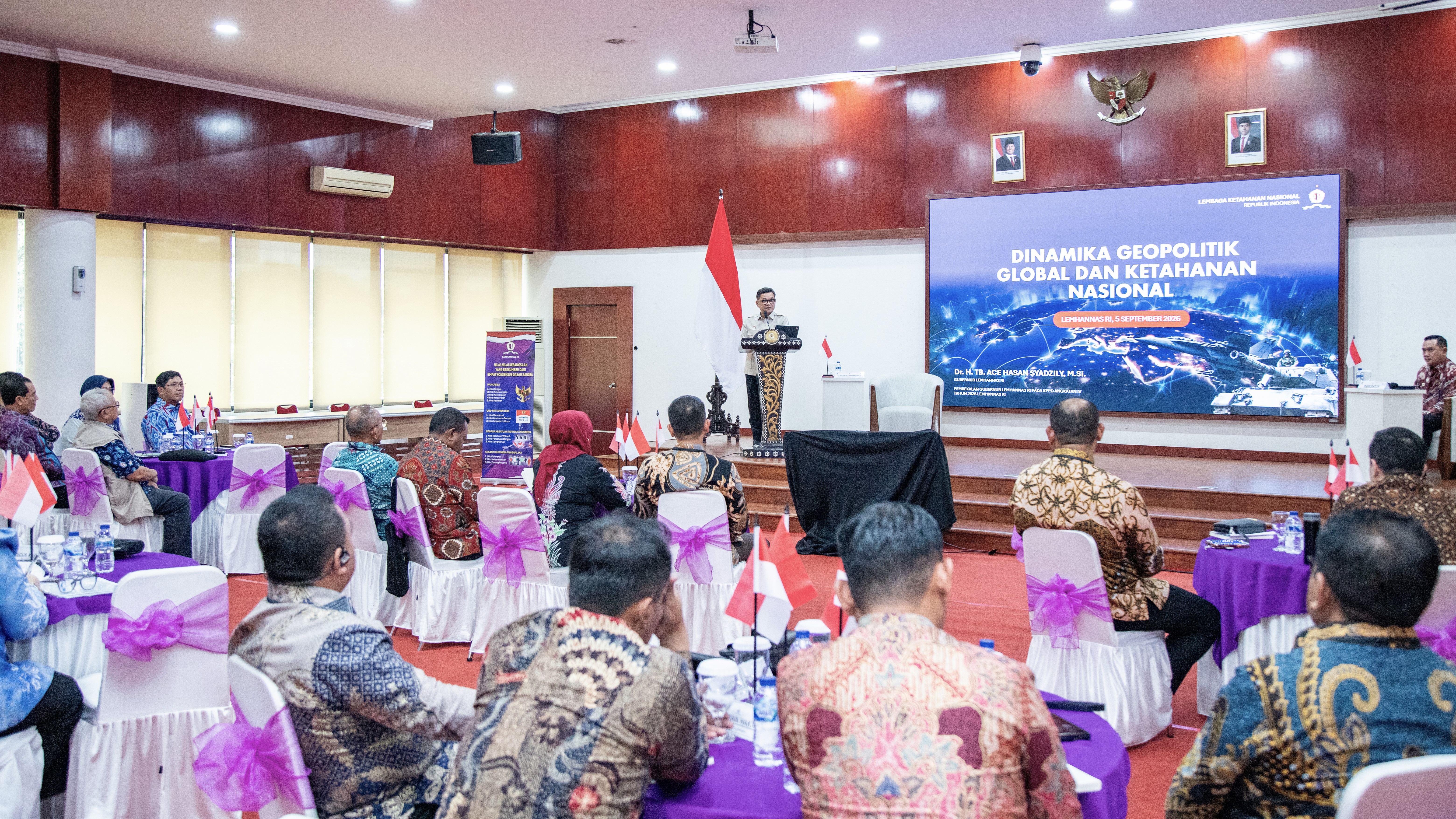
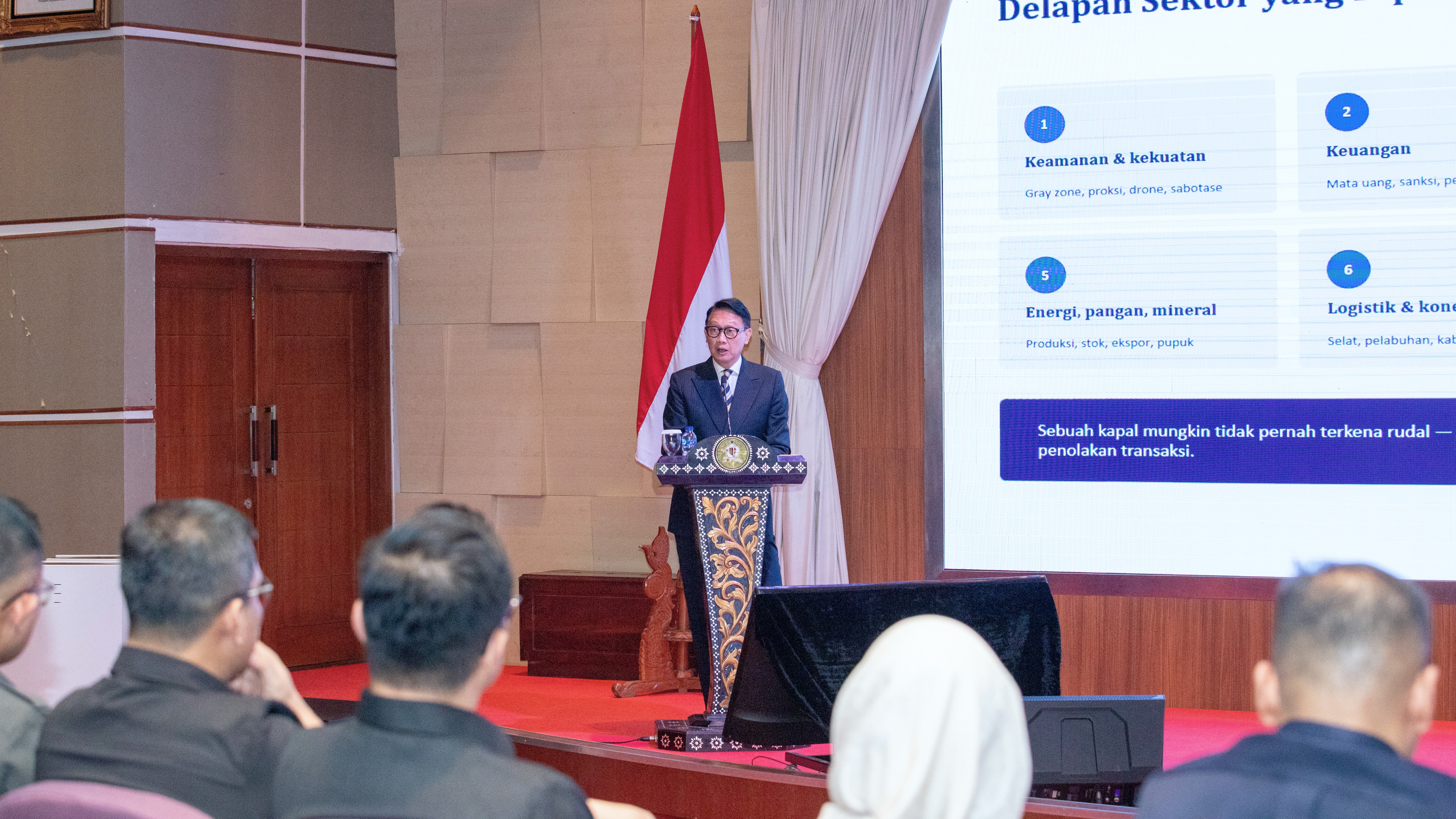
The 3rd Plenary Session of the Jakarta Geopolitical Forum (JGF) X Lemhannas RI, held at the Binakarna Auditorium, Hotel Bidakara, Jakarta, on Thursday (July 9), featured several distinguished speakers, including the Deputy Minister of Communication and Digital Affairs of the Republic of Indonesia, Nezar Patria; the Country Manager of Rockwell Automation Indonesia, Adi Darmadi; the Vice President of International Relations at Thales Group, Jean-Noel Bonnieu; and the President Director of ITSEC Asia, Patrick Rudolf Dannacher.
The plenary session opened with special remarks from Nezar Patria on "Cyber Power and Global Competition: How Small and Middle Powers Can Leverage Digital Economic Transformation."
Starting his presentation, Nezar referenced British history, which demonstrated leadership in the steam-powered Industrial Revolution through broad mechanical and machine development that applied steam power across all economic sectors. In contrast, Germany led in the chemical industry, the United States successfully commercialized chemical engineering, and Japan showed that a highly innovative economy can stall if computerization is not broadly integrated into daily business operations.
Nezar highlighted artificial intelligence (AI) as a versatile technology of the future. He said AI's value is not only felt in cutting-edge laboratories, but also by countries that can build the human resources, computing capacity, data governance, and industrial linkages to apply AI across sectors. "This is the lens that Indonesia must use to navigate the 21st century," he said.
Furthermore, Nezar pointed to the United States' strategic moves to create power control points, such as advanced chip design, software design, and joint control over state-of-the-art lithography machines. Meanwhile, China has pursued a strategy of accelerating self-reliance, including rapid growth in domestic AI accelerator production, alongside a strategic advantage through its dominance in refining critical minerals and rare earth elements.
However, Nezar cautioned that both superpowers risk making the same error: focusing too much on cutting-edge sectors and restrictive strategies while underinvesting in the broader foundation needed for technology to diffuse across society. He explained that states need economic statecraft—using economic instruments such as trade, investment, aid, and sanctions—to pursue national goals.
Nezar added that in the digital era, Indonesia needs "digital statecraft," defined as the art of managing and mobilizing the digital ecosystem to achieve national objectives. He outlined four strategic cards for Indonesia, including natural resource strength (nickel, copper, tin, bauxite, and silica), market power, demographic strength, and computing capacity.
More specifically, Nezar emphasized that Indonesia's greatest strength lies in its resources. As other nations compete for technological supremacy, Indonesia holds the key to future physical infrastructure.
Indonesia's mineral wealth gives it a strategic advantage, enabling the country to act not only as a consumer of technology, but as a central player in the global AI ecosystem. "We are not merely building software. We are building the foundational groundwork of the AI era itself, from the bottom up," Nezar stated.
With Indonesia less than two decades away from 2045, the nation must transform digital adaptation into a strategic technological power. As Nezar noted, statecraft is not just about technology, but about political will—such as the determination to maintain a consistent strategy across different government administrations, patiently build institutions, and strategically define Indonesia's position in the new geopolitical landscape.
The event continued with panel presentations moderated by a Professional Expert in Natural Resources at Lemhannas RI, Ir. Edi Permadi. The first presentation, delivered by Rockwell Automation Indonesia's Country Manager, Adi Darmadi, focused on "Technology Disruption and the Future of Labour Market."
Adi noted that global fragmentation manifests as strategic protectionism, supply chain shifts, cybersecurity challenges, and digital sovereignty. From an industrial perspective, these forces point to a single reality: industries must become more productive, resilient, secure, and adaptive.
This reality applies not only to manufacturing but also to other sectors, such as oil and gas, mining, power generation, data centers, infrastructure, and logistics. Consequently, the transition from automation to autonomous operations becomes essential.
While automation involves a system executing tasks based on pre-programmed logic, autonomous operations enable a system to use data, analytics, and AI to understand conditions, recommend actions, and, in some cases, respond automatically. "The transformation from automation to autonomy is not about replacing humans. It is about helping humans work more safely, productively, and focus on higher-value tasks," Adi explained.
For Indonesia, Adi said automation and autonomy can help expand industrial capacity, attract investment, and create higher-quality jobs. Therefore, the focus is not limited to reducing labour costs, but also to expanding industrial capacity and improving job quality.
The next speaker, Jean-Noel Bonnieu, Vice President of International Relations at Thales Group, presented on "Future Digital Resilience in Safeguarding Critical Infrastructure and Securing Digital Economy." He stated that digitalization is a multi-decade revolution that has accelerated significantly, exposing heightened threats and vulnerabilities.
He cited two driving factors: escalating geopolitical tensions that turn the technological, digital, and cyber realms into arenas for harassment and attacks, and technological advances—such as malicious AI-powered cyberattacks and quantum computing—that will elevate cybersecurity threats to a whole new league.
Jean emphasized that middle powers like Indonesia need to build digital resilience by operating systems that do not rely on a single type of infrastructure while remaining selective and prudent in choosing technology partners. "Building resilience means being able to build solutions that can operate across fragmented architectures," Jean said.
Furthermore, Jean highlighted his company's 45-year track record in Indonesia, from supplying radars and air defense systems, air traffic management services, and satellites, to biometrics and digital identity for over 40 million Indonesian citizens, alongside cybersecurity solutions for more than 30 national banks.
The Thales Group representative added that through partnerships with PT Telkom and the Defense University (Unhan), the company ensures Indonesia's digital system resilience relies on locally built expertise, driving industrial and technological growth while fostering long-term national sovereignty.
Finally, ITSEC Asia President Director Patrick Rudolf Dannacher presented on "Ethics and Responsibility in the Use of AI." Patrick stressed the importance of ethics and governance in using artificial intelligence. He reminded attendees that Indonesia stands at a fundamental crossroads: whether to become a rule-shaper or rule-taker amid diverging AI regulatory approaches in Europe, China, and the United States.
Patrick also outlined several risks in utilizing large language models, including prompt injection, hallucinations, and data leakage. He explained that these risks require strict oversight before deploying them in strategic institutions like the Ministry of Defense or the police force.
Furthermore, Patrick noted that by 2030, Indonesia is projected to face a shortage of 9 million information and communication technology (ICT) workers, with an annual digital talent gap of 450,000 to 600,000 people. To address this, he put forward three primary recommendations: addressing human resource dependencies, enacting risk-based regulations paired with regional leadership and certification, and establishing independent AI quality assurance or insurance.
Closing his presentation, Patrick reaffirmed that Indonesia must actively become a rule shaper rather than remain a rule taker. (SP/CHP/DA)