Lemhannas RI Welcomes Daniel K. Inouye Asia-Pacific Center for Security Studies (DKI APCSS) Delegations
News & Article Tuesday, 24 February 2026, 16:00
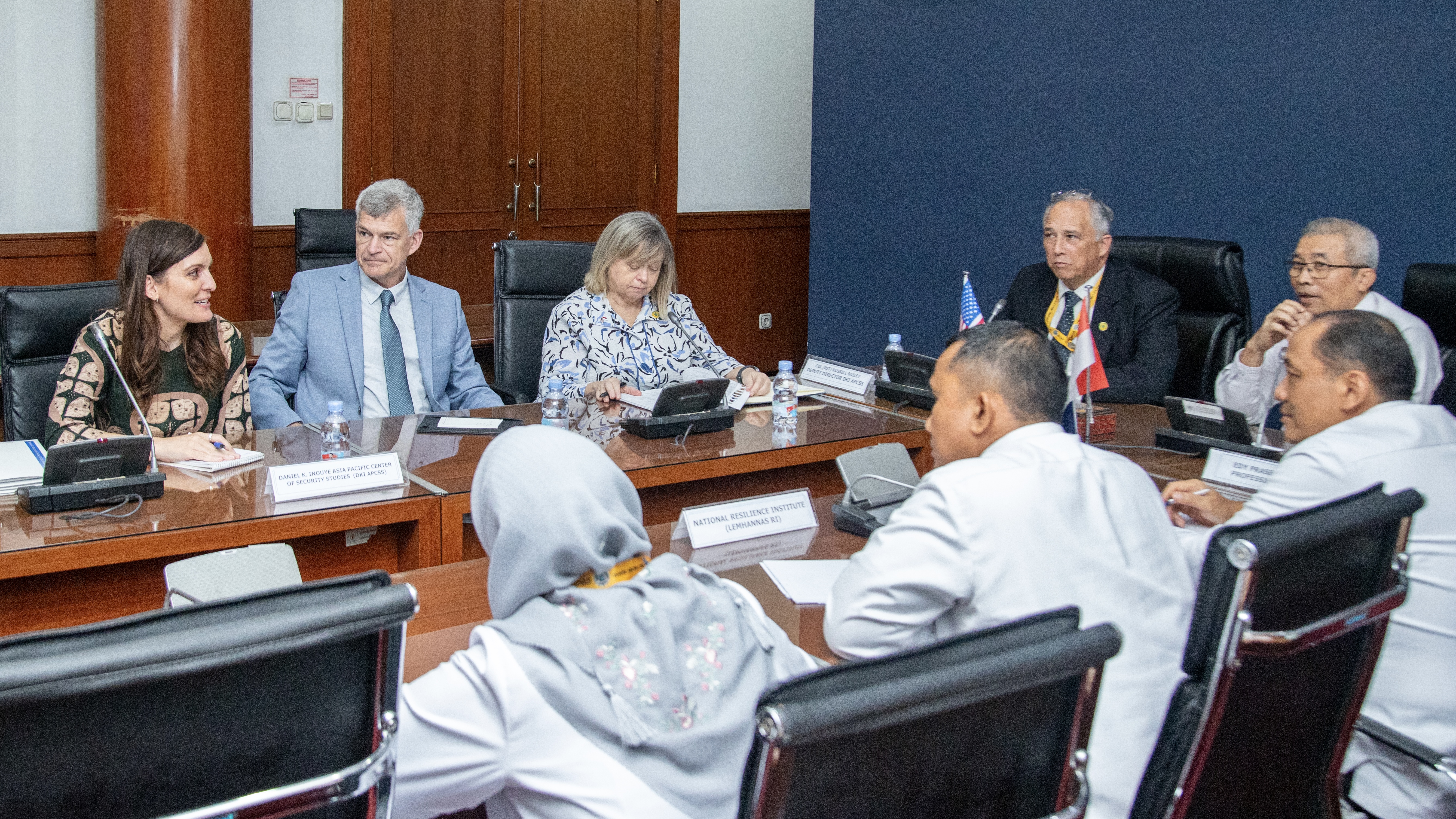
Lemhannas RI received a delegation from Daniel K. Inouye Asia-Pacific Center for Security Studies (DKI APCSS) at the Nusantara 2 Room, Tri Gatra Building, Lemhannas RI, on Tuesday (2/24). The DKI APCSS delegation was led by its Deputy Director, Col. (Ret.) Russell Bailey.
Lemhannas RI’s Professional Expert in Geopolitics, Edy Prasetyono, S.Sos., MIS., Ph.D. welcomed the delegation. The visit served as a strategic momentum to strengthen regional security dialogue in the Indo-Pacific amid increasingly complex global geopolitical dynamics.
In his opening remarks, Russell Bailey expressed appreciation for the warm welcome and reaffirmed the commitment to expand strategic dialogue. The delegation emphasized the importance of exchanging perspectives in addressing contemporary security challenges, including the implications of migration, alliance dynamics and shifts in the global political landscape. “We aim to build discussions that are open, respectful and based on trust. America First does not mean America Alone,” a DKI APCSS representative said, stressing that the United States continues to view partnerships as a key element of regional stability.
Lemhannas RI presented an institutional profile video outlining its vision, mission and strategic role in preparing and strengthening national leadership. The institute conducts regular and short-term education programs for high-ranking military and police officers, as well as officials from ministries and government agencies. It also carries out strategic studies at the national, regional and international levels, focusing on democratic consolidation, the green economy, digital transformation and the strengthening of national values. Through national dialogue, instructor training and strategic studies both domestically and abroad, Lemhannas serves as a strategic think tank dedicated to fostering a sovereign, self-reliant and collaborative Indonesia.
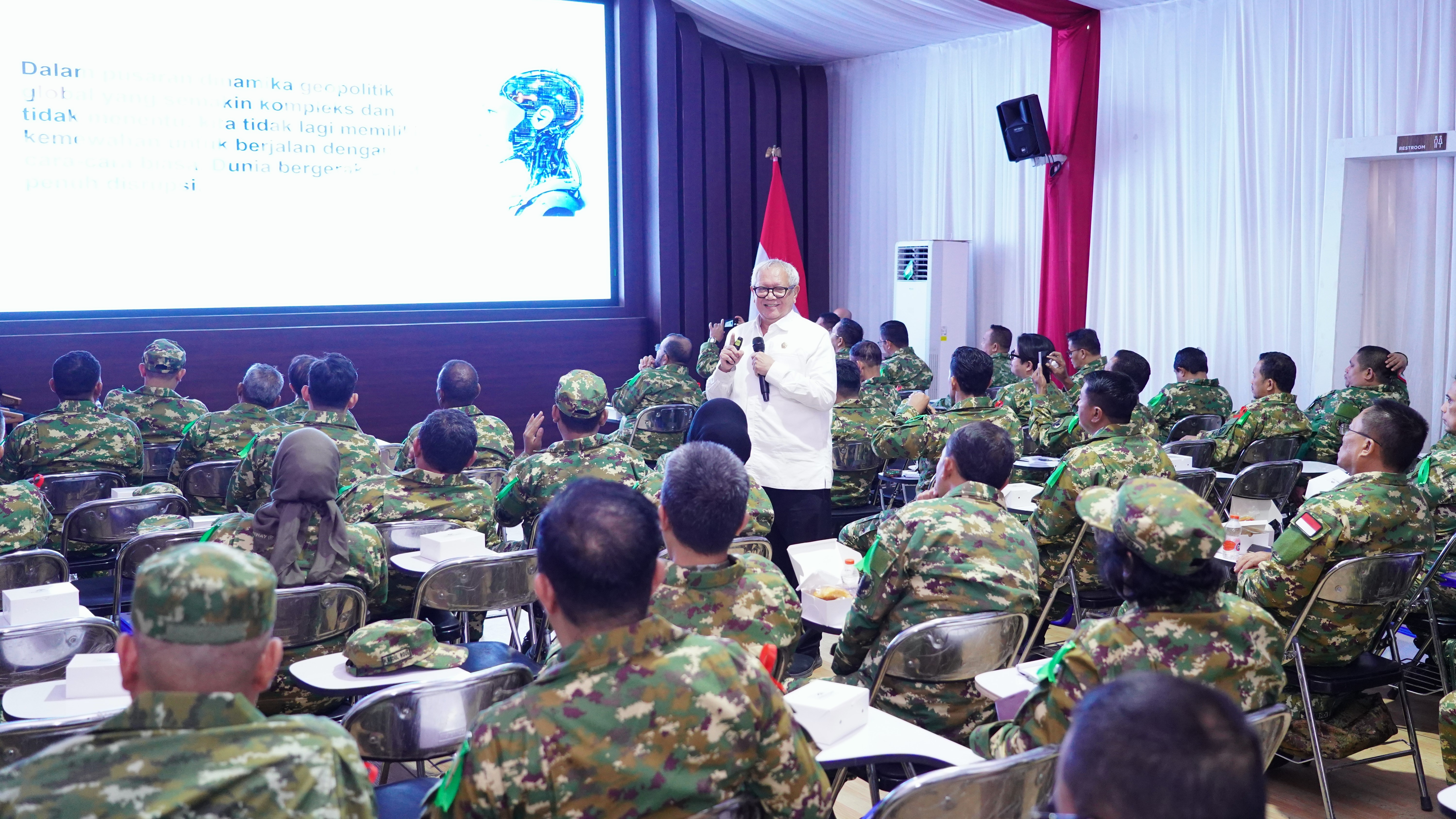
In a presentation on the regional security environment, Edy Prasetyono outlined three key characteristics of current regional dynamics: great power rivalry, an arms race and increasingly complex intra-regional dynamics. He added that several intervening developments are accelerating change, including the emergence of new security arrangements, the erosion of norms governing the use of military force, growing questions regarding China’s role and the practice of weaponizing trade as a political instrument. He also highlighted the weakening of global institutions and uncertainties surrounding the direction of United States foreign policy, whether it will emphasize reciprocal equality or adopt a more unilateral and transactional approach, as well as whether it will be values-based or driven by pragmatism.
In response, the DKI APCSS delegation said current United States policy is shaped by a sense of urgency toward an increasingly dangerous security environment. They noted that the burden of regional security has largely been borne by the United States compared to some partners, prompting a push for more balanced and equitable relationships. While acknowledging that the approach may appear pragmatic, they stressed that its aim is to strengthen partnership effectiveness and encourage more proportional contributions from allies and partners.
The discussion further explored a fundamental question regarding the future global order: whether it will move toward a values-based system or become increasingly fragmented and pragmatic. Lemhannas RI noted that countries in the region are facing a dilemma between resisting or accommodating, while seeking to minimize risks through new patterns of engagement and contingency planning, including strengthening regional arrangements.
The dialogue proceeded in an open and constructive manner. Both sides agreed that amid great power rivalry and global uncertainty, strategic communication channels must be maintained. For DKI APCSS, partnerships with strategic education institutions such as Lemhannas RI are important to enrich perspectives and strengthen regional security networks. For Lemhannas RI, the exchange of views forms part of efforts to deepen understanding of global geopolitical dynamics in support of Indonesia’s national interests.
The meeting served not only as a forum for discussion but also as a reflection that Indo-Pacific stability requires honest, respectful dialogue grounded in shared interests. In an increasingly uncertain global context, cooperation and strategic communication remain key to maintaining regional balance and resilience. (ZA/CHP/MDF)