Constitutional Court Chief Highlights Court’s Role in National Development
News & Article Friday, 06 February 2026, 14:00
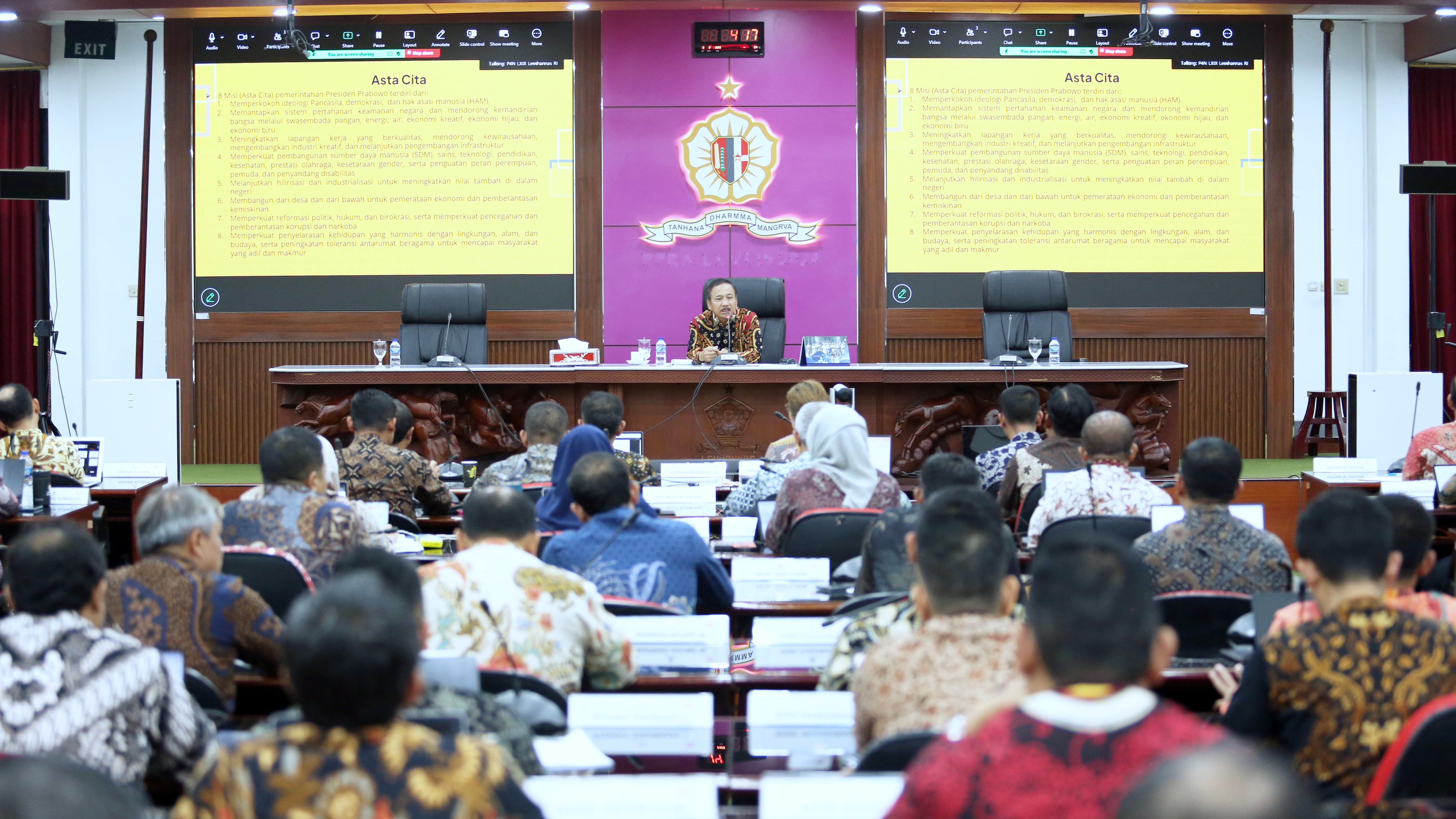
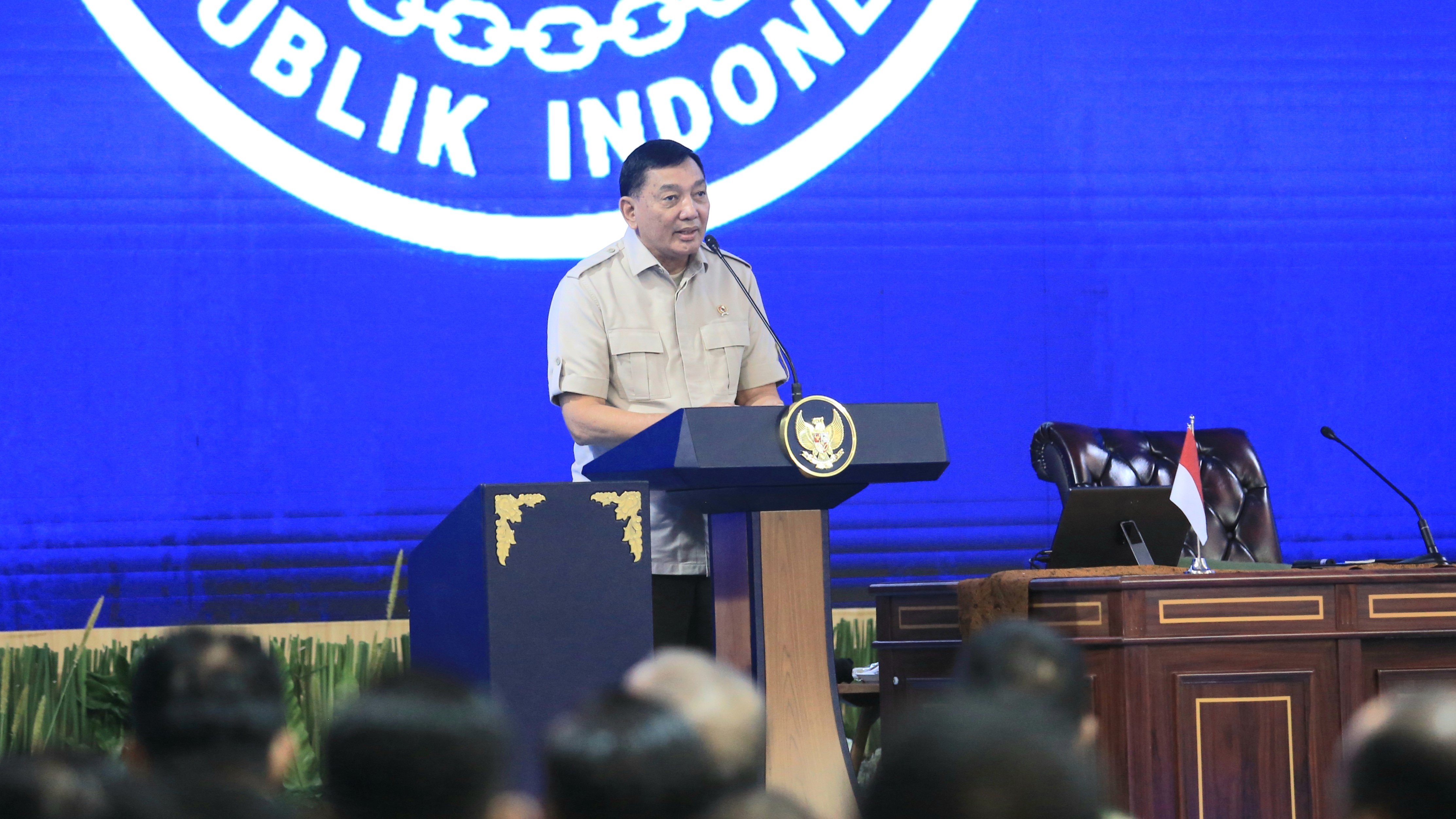
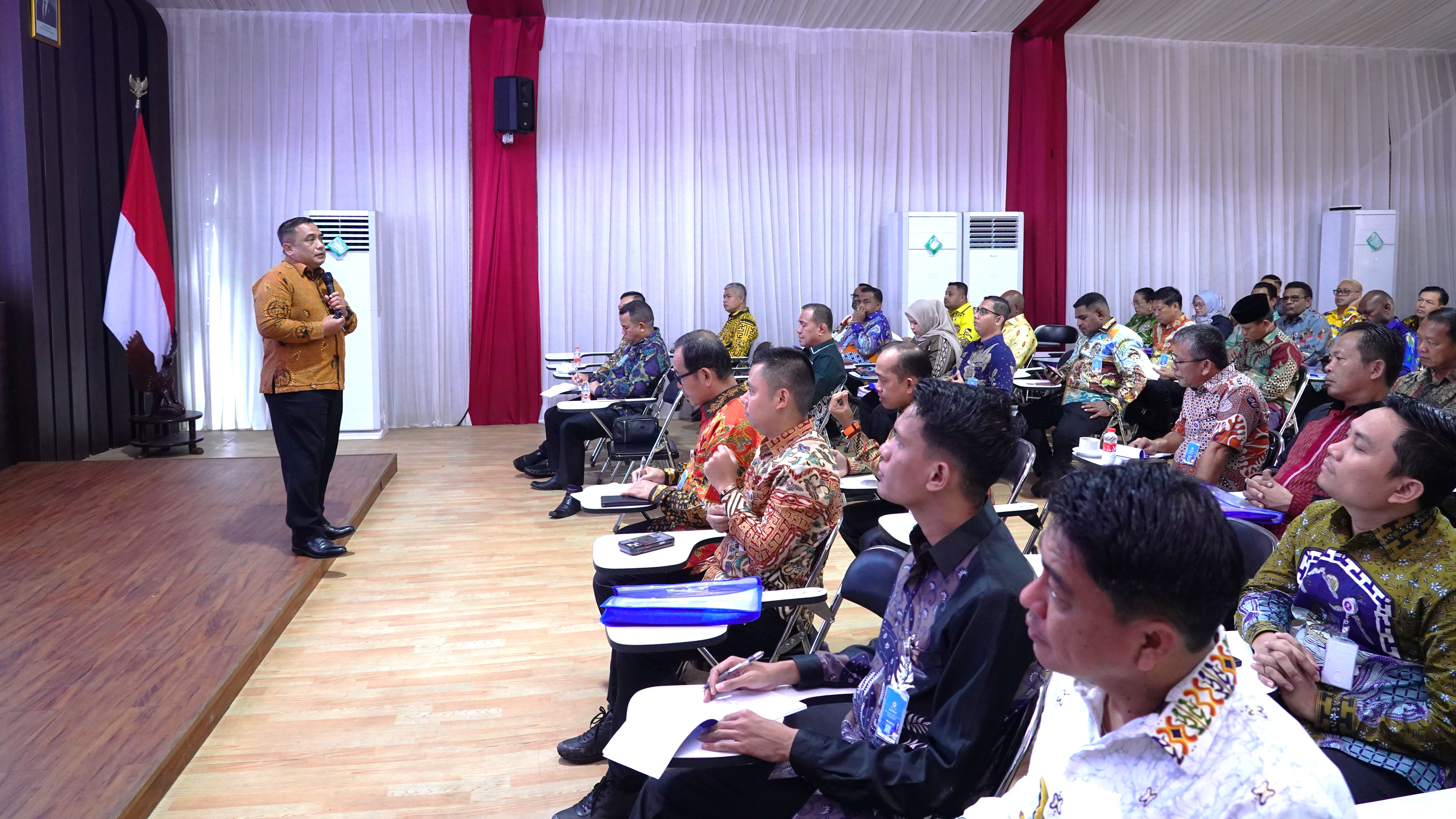
Chief Justice of the Constitutional Court of Indonesia, Suhartoyo, delivered a lecture to participants of the Preparation and Consolidation Program for the National-level Leaders (P4N) Batch LXIX on “The Role of the Constitutional Court in Realizing National Development and Strengthening Asta Cita” on Friday (2/6) at the NKRI Hall of Lemhannas RI.
At the beginning of his presentation, Suhartoyo explained that the Constitutional Court’s primary duty is to review laws against the 1945 Constitution of the Republic of Indonesia, a process commonly referred to as judicial review. In addition to conducting judicial reviews, the Court is also authorized to adjudicate disputes over the constitutional authority of state institutions granted by the Constitution, decide on the dissolution of political parties and rule on disputes related to general elections.
Suhartoyo further explained that the relevance of the Constitutional Court’s existence to national development and the Asta Cita agenda can be seen in the process of lawmaking. “If we observe closely, there is a clear correspondence between the national development envisioned by this country and the formation of laws,” the chief justice said. Laws, he added, serve as one of the key instruments for achieving the state’s goals, particularly the welfare of the people, which forms an integral part of comprehensive national development.
`
As instruments to achieve national welfare, laws must prioritize the interests of the nation. The presence of the Constitutional Court, he said, is essential to review laws enacted by the government and the House of Representatives to ensure that regulations are not driven by political interests or influenced by particular groups at the expense of the broader interests of society and the nation.
Concluding his presentation, Suhartoyo noted that the Constitutional Court plays a crucial role as the guardian of the Constitution, the final interpreter of the Constitution, the protector of democracy, the defender of human rights and the protector of citizens’ constitutional rights. He added that the Court’s rulings have three defining characteristics: final, erga omnes and self-executing.
A final ruling means that the Court’s decision cannot be appealed. The erga omnes principle indicates that the ruling applies not only to the parties involved in the case but also to the public at large. Meanwhile, a self-executing decision carries immediate legal force and can take effect automatically without requiring enforcement by a separate institution. (SF/SP/CHP/MDF)