Jimly Asshiddiqie Outlines the Challenges of the 1945 Constitution toward Indonesia Emas 2045
News & Article Thursday, 05 February 2026, 14:00
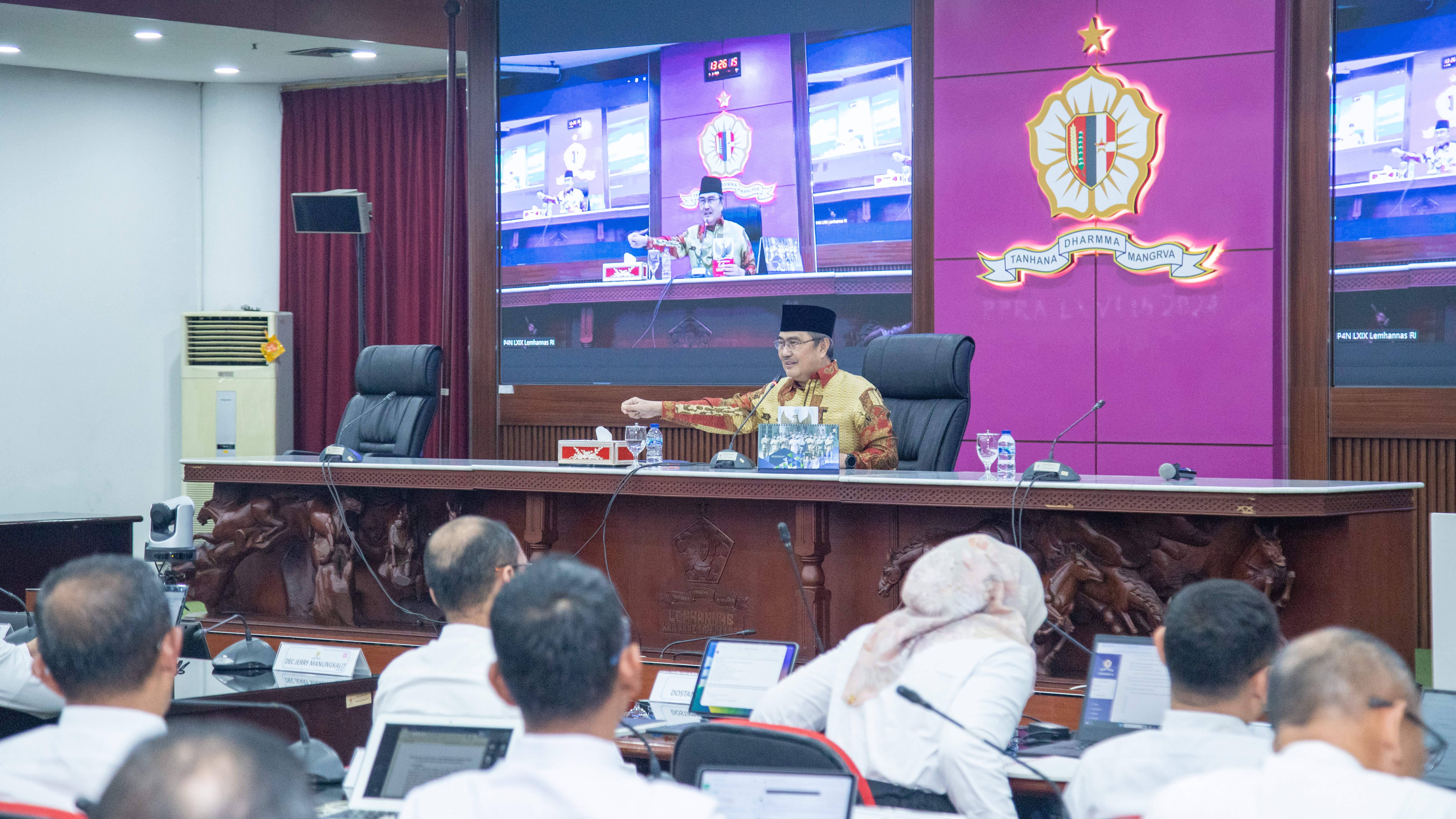
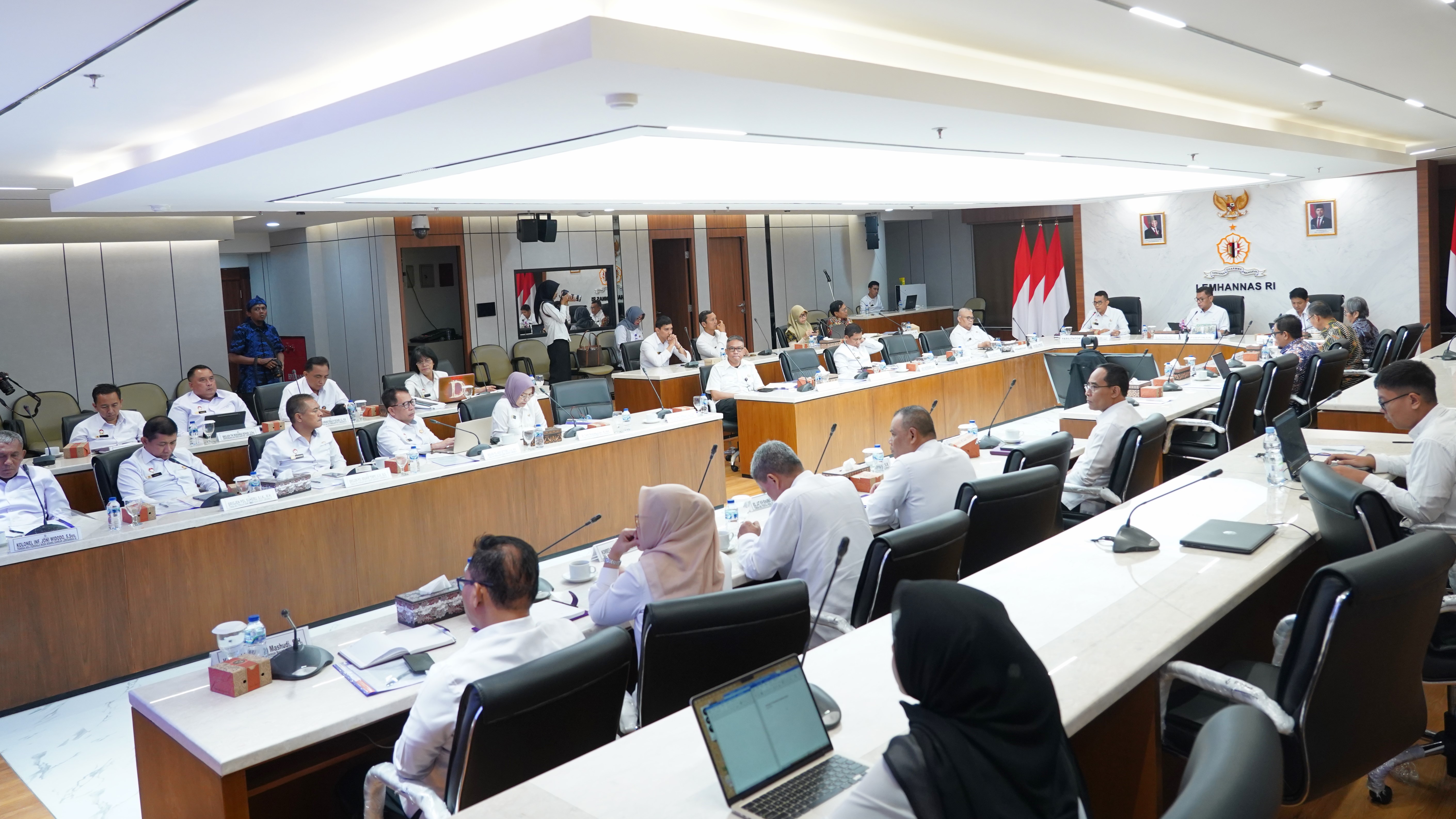
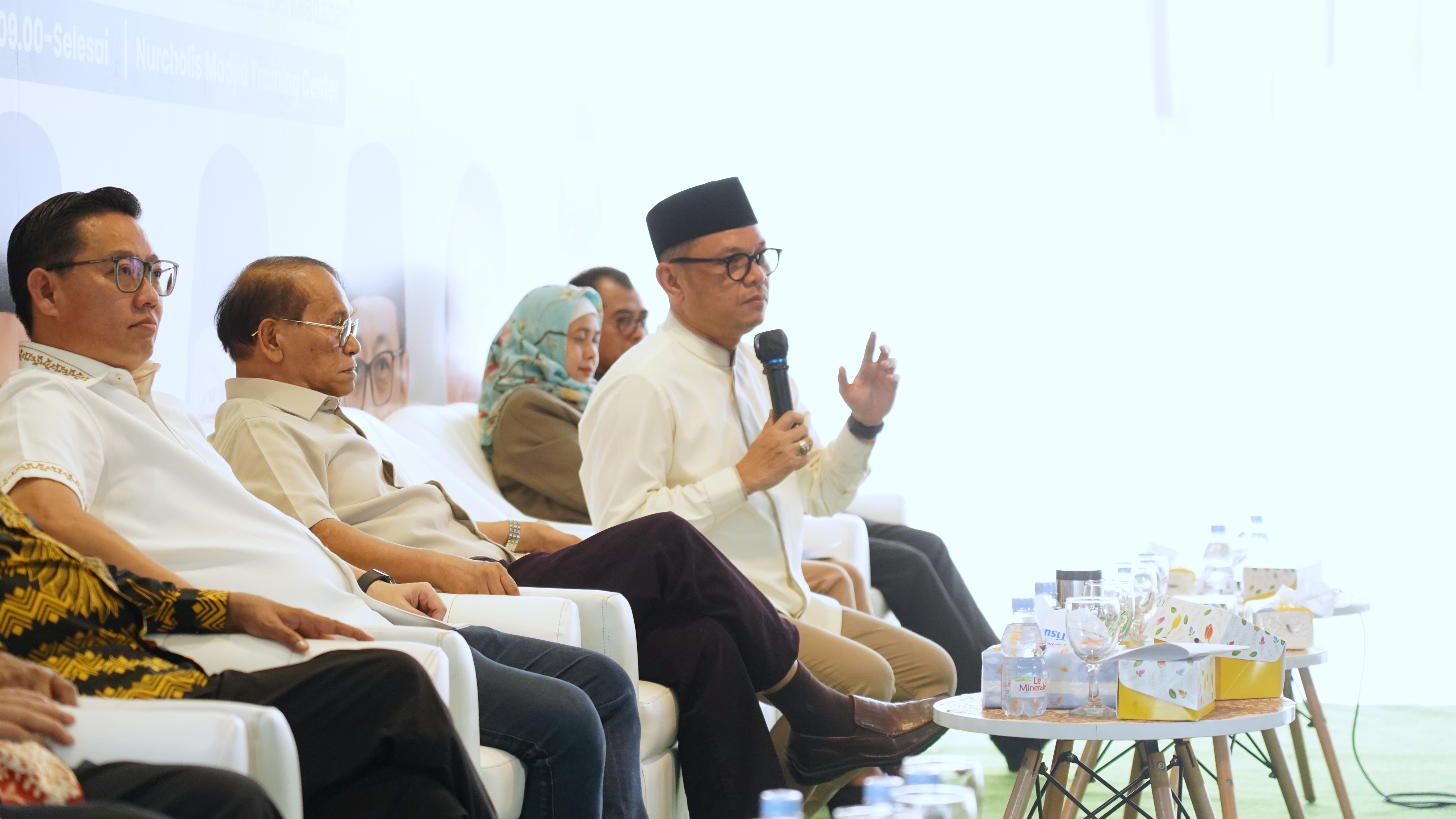
Jimly Asshiddiqie delivered a lecture on the history, process and challenges of the 1945 Constitution toward Indonesia Emas 2045 to participants of the Preparation and Consolidation Program for the National-level Leaders (P4N) Batch LXIX at Lemhannas RI on Thursday (2/5). In his presentation, he outlined the development of Indonesia’s constitutional system from 1945 through the reform era.
Jimly explained that since Aug. 18, 1945, Indonesia has functioned as a constitutional state following the enactment of the 1945 Constitution of the Republic of Indonesia. Over time, however, the country’s constitutional framework underwent several transformations. In 1949, Indonesia became the Republic of the United States of Indonesia (RIS) with its own constitution, under which the Republic of Indonesia existed as one of the federal states. After the Integral Motion and an agreement to return to a unitary state, Indonesia adopted the 1950 Provisional Constitution.
The 1950 Provisional Constitution served as the legal basis for Indonesia’s first general election in 1955, which produced the Constituent Assembly tasked with drafting a new constitution. However, the assembly failed to complete its mandate, prompting the president to issue the July 5, 1959 Presidential Decree reinstating the 1945 Constitution.
Jimly noted that there are differences between the original text of the 1945 Constitution adopted on Aug. 18, 1945, and the version reinstated through the 1959 decree. The distinction lies in the explanatory section, which was later deemed an inseparable part of the constitutional text. This arrangement remained in place throughout the New Order period.
During the reform era, constitutional amendments were carried out in four stages in 1999, 2000, 2001 and 2002. Jimly stressed that the first through fourth amendments constitute a single, integrated process. He cited amendments to Articles 20 and 5 of the 1945 Constitution, which shifted legislative authority from the president to the House of Representatives. The revisions also introduced Article 20 paragraph (5), stipulating that a bill jointly approved by the government and the House would automatically become law within 30 days.
“Fundamentally, our constitutional journey has passed through several republican phases: the 1945 Constitution as the first phase, the RIS Constitution as the second, the 1950 Provisional Constitution as the third, a return to the 1945 Constitution through the Presidential Decree as the fourth and, after reform, we entered the fifth republican phase,” Jimly said.
He added that the developments raise an important question: whether the post-reform constitution still requires further refinement. Answering this, he argued, requires a comprehensive evaluation of constitutional changes over the past 25 years. Such an assessment should examine not only the amendments themselves but also the policies produced from them, allowing for a clearer understanding of their strengths, weaknesses and future implementation.
Concluding his lecture, Jimly said the present moment offered a timely opportunity to begin discussing such an evaluation. “So, colleagues, it is time for us to discuss efforts to conduct an evaluation,” he told the P4N Batch LXIX participants. (IS/CHP/MDF)